Serving an elegant Roast Beef Tenderloin transforms any standard dinner party into an unforgettable culinary experience. If you have been searching for a foolproof method to achieve a restaurant-quality centerpiece, this recipe is your holy grail. We are combining high-heat searing with gentle oven roasting to lock in those glistening natural juices.
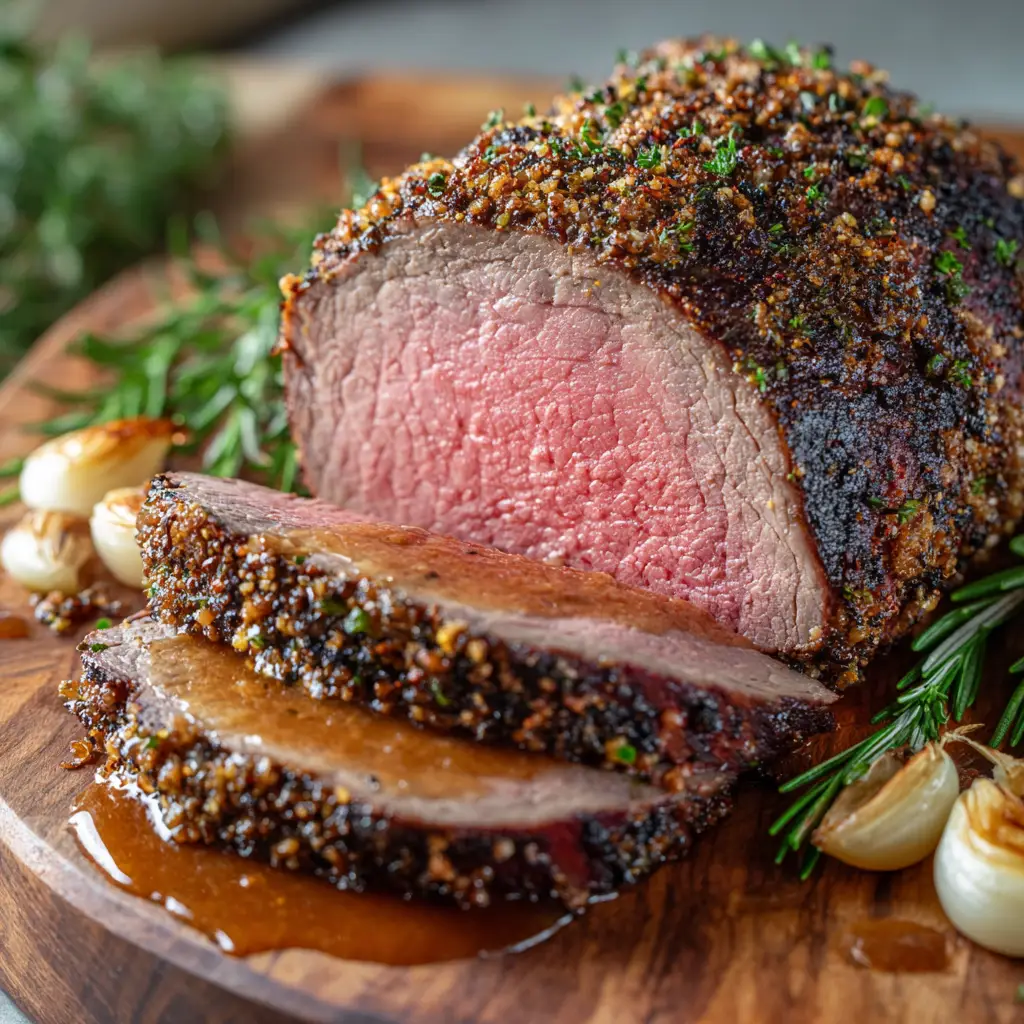
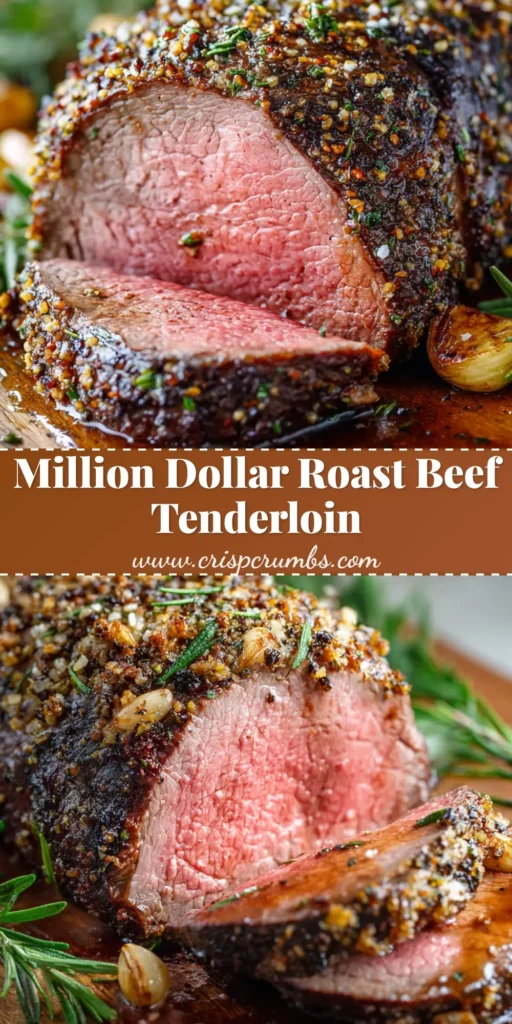
The secret to this spectacular cut of meat lies in the heavily textured, aromatic exterior. A thick, dark caramelized crust yields to a perfectly medium-rare pink interior that melts in your mouth. Best of all, we capture every drop of flavor by building a rich brown au jus directly from the pan drippings.
Sensory Delights of this Premium Cut
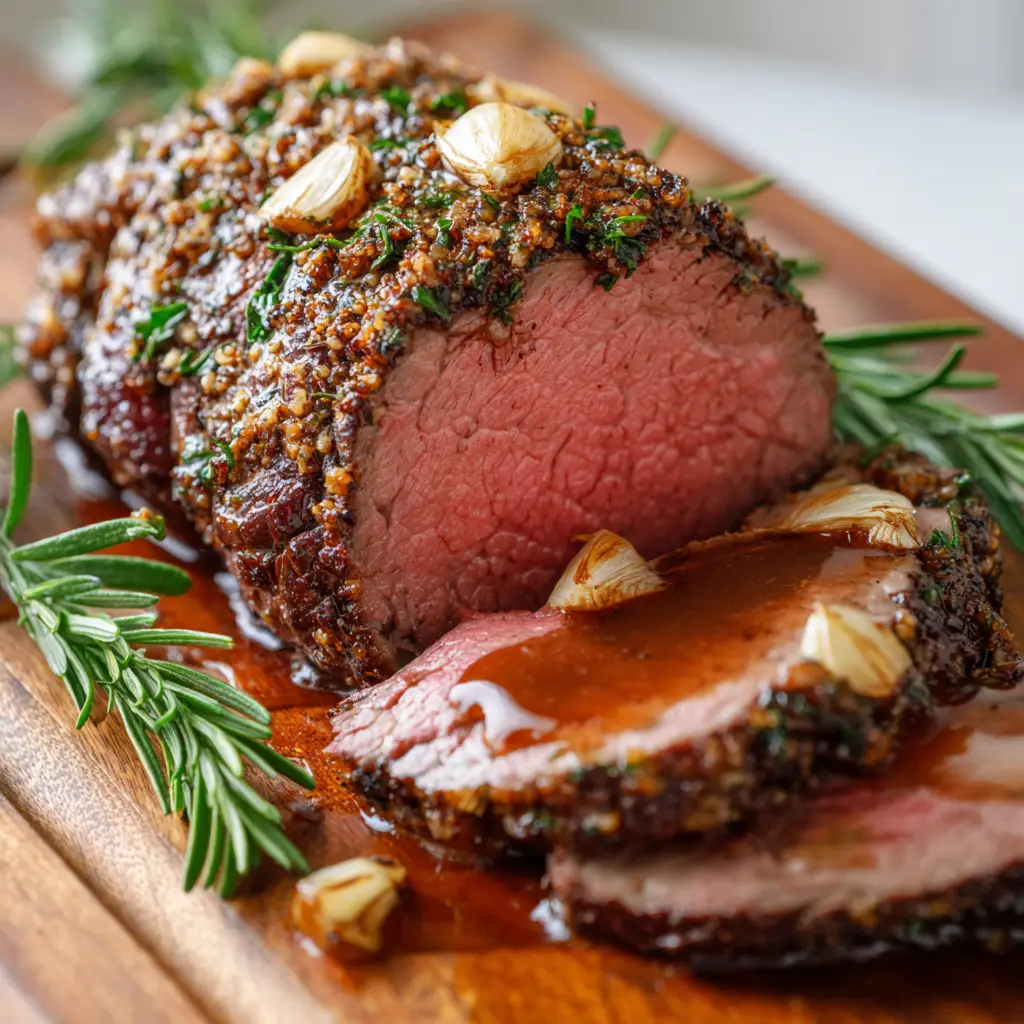
- Perfectly Medium-Rare Center: Gentle, controlled oven temperatures ensure the interior remains a vibrant, juicy pink without overcooking.
- Dark Caramelized Crust: A hard sear in a hot skillet builds a rugged, deeply browned exterior that holds up to the rich seasonings.
- Bold Textural Contrast: The crust is generously coated in coarse black peppercorns, flaky sea salt, and finely chopped vibrant green rosemary.
- Savory Pan Drippings: Thin pools of rich brown au jus provide a deeply savory finishing sauce that enhances the beef’s natural flavor profile.
- Aromatic Garnishes: Whole roasted garlic cloves and fresh green rosemary sprigs surround the meat, infusing the serving board with intoxicating aromas.
Essential Components for a Flawless Tenderloin
Center-Cut Beef Tenderloin: You will need a 3 lb (1.36kg) center-cut roast, often referred to as a chateaubriand. This uniform thickness ensures the meat cooks evenly from edge to edge.
Avocado Oil: Using 2 tbsp (30ml) of a high-smoke-point oil is mandatory for the initial sear. It prevents bitter, burnt flavors while allowing the meat to develop a dark caramelized crust.
Roasted Garlic: You will need 1/4 cup (60g) of minced roasted garlic for the rub, plus 1 whole head of separated, roasted cloves for the garnish. Roasting the garlic beforehand mellows its bite and provides a sweet, sticky binder for the crust.
Coarse Black Peppercorns: Roughly crushing 2 tbsp (30g) of whole black peppercorns creates a bold, crunchy texture. This assertive spice cuts through the richness of the beef.
Fresh Rosemary: Use 2 tbsp (8g) of finely chopped vibrant green rosemary for the herb paste, plus extra whole sprigs for the board. The piney, woodsy aroma perfectly complements roasted meats.
Flaky Sea Salt: A generous pinch of flaky sea salt applied right before slicing provides sudden bursts of pure, clean salinity. Do not substitute this with standard table salt.
Unsalted Butter: Adding 2 tbsp (30g) of unsalted butter to the skillet during the final stages of searing adds dairy solids that accelerate browning. It also forms the luscious base for the pan sauce.
Beef Bone Broth: Deglazing the skillet with 1 cup (240ml) of high-quality beef bone broth lifts the caramelized fond from the pan. This is the foundational liquid for your rich brown au jus.
Essential Tools for Searing and Roasting
Achieving a picture-perfect Roast Beef Tenderloin requires heavy-duty heat retention. A large cast-iron skillet is non-negotiable for creating that thick, dark crust. You will also need a highly accurate digital meat thermometer to guarantee a juicy, medium-rare pink center. Finally, a rustic wooden carving board with a juice groove is essential for resting and slicing the meat while capturing the flavorful drippings.
Executing the Perfect Roast Beef Tenderloin Sear and Bake
Preparing and Tying the Meat
Begin by letting your beef rest at room temperature for at least 45 minutes to remove the chill. Use kitchen twine to tie the roast in 1.5-inch (4cm) intervals to ensure it maintains a perfectly cylindrical shape. Pat the exterior completely dry with paper towels to guarantee a hard sear.
Building the Aromatic Garlic Herb Paste
In a small bowl, aggressively mash the minced roasted garlic with the chopped fresh rosemary and coarse black peppercorns. Stir in 1 tbsp (15ml) of olive oil to loosen the mixture into a thick, sticky paste. Set this aside; applying it before searing would cause the delicate garlic and herbs to scorch.
Executing the High-Heat Sear
Heat your cast-iron skillet over medium-high heat until it begins to lightly smoke, then pour in the avocado oil. Carefully lay the beef in the skillet, listening for an aggressive sizzle. Sear undisturbed for 2-3 minutes per side until a deeply dark, caramelized crust forms.
Applying the Crust and Roasting
Once seared, transfer the skillet off the heat and quickly brush the entire exterior of the meat with your roasted garlic and rosemary paste. Insert your meat thermometer into the thickest part of the center. Transfer the skillet to a preheated 400°F (200°C) oven and roast until the internal temperature reaches exactly 120°F (49°C) for medium-rare.
Crafting the Rich Brown Au Jus
Remove the beef to your wooden carving board to rest, leaving the drippings in the skillet. Place the skillet back on the stove over medium heat and whisk in the beef bone broth, scraping up all the browned bits. Let the liquid simmer and reduce by half until it transforms into thin pools of rich brown au jus.
Garnishing and Carving
Scatter the whole roasted garlic cloves and fresh green rosemary sprigs around the base of the resting meat. After a mandatory 15-minute rest, sprinkle the exterior heavily with flaky sea salt. Slice the meat thickly, revealing the tender meat grain and glistening juices.
Pro Techniques for a Juicy, Medium-Rare Center
- Beware of Carryover Cooking: Pull the meat from the oven exactly at 120°F (49°C). The internal temperature will continue to rise by 10°F (5°C) while resting, landing at a perfect 130°F (54°C).
- Never Skip the Rest: Slicing into the roast immediately will cause the juices to violently flood the cutting board. Resting allows the muscle fibers to relax and retain moisture.
- Dry Surface Area: Any surface moisture on the beef will create steam in the skillet. Patting it bone-dry is the only way to achieve that highly sought-after dark crust.
- Manage Pan Heat: If your skillet starts smoking aggressively during the sear, lower the heat slightly. You want a deep brown sear, not an acrid, blackened exterior.
Preserving Leftover Tenderloin and Au Jus
Store any leftover Roast Beef Tenderloin in an airtight container in the refrigerator for up to three days. Keep the sliced meat separate from the rich brown au jus to prevent the crust from becoming soggy. When reheating, do so incredibly gently to avoid losing the medium-rare pink interior.
The best method for reheating is placing the slices in a warm skillet over low heat with a splash of the au jus just until warmed through. Alternatively, cold leftover slices make absolutely phenomenal sandwiches the next day. Freezing is not recommended, as it alters the delicate texture of this premium cut.
Perfect Pairings for Center-Cut Beef
A show-stopping Roast Beef Tenderloin demands side dishes that can stand up to its rich, savory profile. Serve it alongside a generous portion of Greek lemon potatoes to soak up those thin pools of au jus. For a vibrant, comforting vegetable addition, a creamy winter vegetable casserole offers the perfect textural contrast.
If you are hosting a large gathering and want to offer a secondary protein, a garlic-herb cowboy butter steak complements the flavor profile beautifully. To add an unexpected sweet and spicy kick to your side dishes, try drizzling a little garlic hot honey over some roasted carrots or Brussels sprouts. For another slow-cooked, deeply savory option during the week, check out our slow cooker pepper steak.
Common Questions About Roasting Beef Tenderloin
While you can prepare a basic beef broth reduction ahead of time, the true flavor of the au jus comes from the caramelized pan drippings (fond) created during the searing process. It is highly recommended to make the au jus in the same skillet while the tenderloin is resting.
To prevent bitter, burnt garlic, do not apply the roasted garlic and rosemary paste before searing. Instead, sear the bare, dry meat first to build the dark caramelized crust, then generously brush the paste onto the exterior right before transferring it to the oven.
You should pull the beef tenderloin from the oven exactly when a meat thermometer registers 120°F (49°C) in the thickest part of the center. Carryover cooking during the 15-minute rest period will raise the final temperature to a perfect 130°F (54°C).
Tying the beef tenderloin with kitchen twine in 1.5-inch intervals ensures the meat maintains a uniform, cylindrical shape. This guarantees it cooks evenly from end to end, preventing the thinner tail sections from drying out.
A weak crust is usually caused by excess moisture on the surface of the meat. Ensure you pat the tenderloin completely dry with paper towels before searing. Additionally, make sure your skillet and high-smoke-point oil are incredibly hot before adding the beef.
The Ultimate Garlic Herb Roast Beef Tenderloin Recipe Card
The Ultimate Garlic Herb Roast Beef Tenderloin
Ingredients
Equipment
Method
- Let the beef tenderloin rest at room temperature for 45 minutes. Tie with kitchen twine in 1.5-inch (4cm) intervals and pat completely dry with paper towels.
- In a small bowl, mash the minced roasted garlic, chopped rosemary, coarse black peppercorns, and olive oil to form a thick, sticky paste.
- Heat a cast-iron skillet with avocado oil over medium-high heat. Sear the beef for 2-3 minutes per side until a dark caramelized crust forms.
- Remove skillet from heat and brush the beef with the garlic-herb paste. Insert a thermometer and roast in a 400°F (200°C) oven until the center reaches 120°F (49°C).
- Transfer the beef to a carving board to rest. Place the skillet back on the stove, add butter and beef bone broth, scraping up browned bits. Simmer until reduced by half into a rich brown au jus.
- Surround the resting meat with whole roasted garlic cloves and fresh rosemary sprigs. After 15 minutes, sprinkle with flaky sea salt, slice thickly, and serve with the au jus.
Notes
Resting: Never skip the 15-minute rest period, or the juices will bleed out.
Share Your Culinary Masterpiece
Mastering this Roast Beef Tenderloin is a milestone for any enthusiastic home cook. The combination of that dark, peppercorn-crusted exterior and the impossibly tender, medium-rare center is guaranteed to leave your guests speechless. Don’t forget to serve it right on the carving board so everyone can admire those beautiful, glistening juices.
If you achieved the perfect pink center using our temperature guide, please leave a star rating and comment below! We love seeing your holiday table spreads, so be sure to pin this recipe to your dinner boards and tag us on Pinterest. Subscribe to our newsletter for more premium, foolproof dinner recipes delivered straight to your inbox.