Welcome to the recipe that will transform your sourdough baking. This Pesto Parmesan Sourdough is an absolute masterpiece of flavor, combining the tangy complexity of a classic sourdough with the aromatic, savory punch of fresh pesto and the sharp, nutty notes of Parmesan cheese. If you’re ready to bake a loaf that looks as incredible as it tastes, you’ve come to the right place. We’re about to create a bread that’s perfect for sandwiches, toast, or simply tearing and sharing.
The magic of this recipe lies in the lamination process, where we gently fold the pesto and cheese into the dough. This creates stunning swirls of green and cheesy pockets throughout the loaf, ensuring every single slice is packed with flavor. Don’t be intimidated; I’ll walk you through every step with clear, simple instructions.
Why You’ll Love This Pesto Parmesan Sourdough Recipe
- Incredible Flavor Fusion: The classic sourdough tang is perfectly complemented by the herby, garlicky pesto and salty Parmesan. It’s a truly irresistible combination.
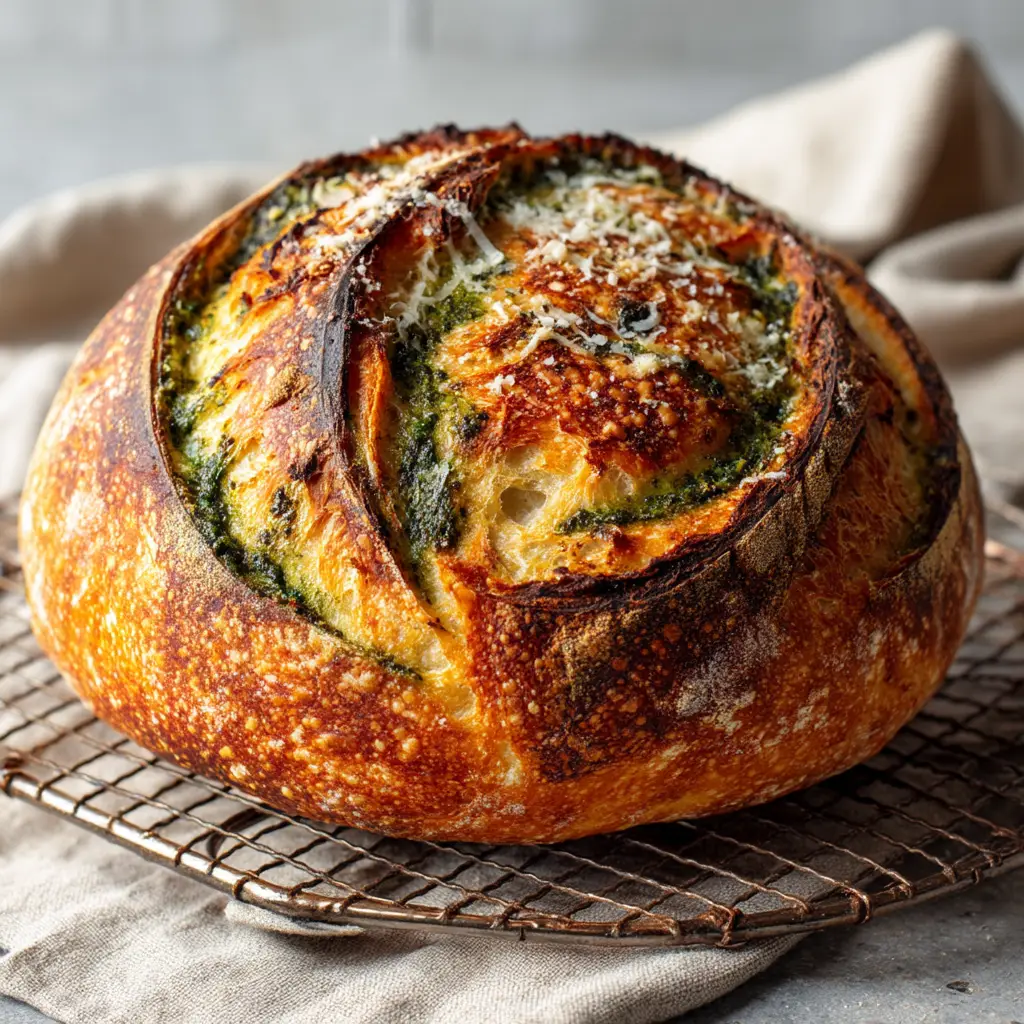
- Stunning Visual Appeal: The beautiful green swirls of pesto make this a showstopper loaf. It’s an artisan bread that will impress everyone.
- Soft, Chewy, and Crispy: We’re aiming for that perfect sourdough texture: a soft, open crumb, a satisfyingly chewy interior, and a deeply golden, crispy crust.
- Surprisingly Versatile: This bread elevates everything. Use it for a gourmet grilled cheese, as a side for your favorite soup like this delicious ratatouille soup, or as the base for a show-stopping bruschetta.
Essential Ingredients
Achieving the perfect Pesto Parmesan Sourdough starts with quality ingredients. Here’s what you’ll need:
For the Sourdough
- Sourdough Starter: 100g active and bubbly starter. It should be at its peak, about 4-6 hours after feeding.
- Bread Flour: 500g high-protein bread flour for a strong, chewy structure.
- Water: 350g warm water (around 85°F or 29°C).
- Salt: 10g fine sea salt to enhance flavor and control fermentation.
For the Filling
- Pesto: 1/2 cup of your favorite pesto. A thicker, high-quality pesto works best to prevent leakage.
- Parmesan Cheese: 1 cup freshly grated Parmesan cheese. Avoid pre-shredded cheese, as it often contains anti-caking agents that affect the melt.
A Step-by-Step Guide to Baking Pesto Parmesan Sourdough
Follow these steps carefully for a perfect loaf. Remember that sourdough baking is a process that relies on look and feel, so use these instructions as your guide.
Step 1: Activate Your Sourdough Starter
Feed your sourdough starter 4-6 hours before you plan to mix your dough. You’re looking for it to double in size and become very active and bubbly. A healthy starter is the foundation of great bread.
Step 2: Mix the Dough (Autolyse and Final Mix)
In a large mixing bowl, combine the flour and water. Mix until no dry spots remain. Cover and let it rest for 30-60 minutes. This step, known as the autolyse, allows the flour to hydrate fully. After the autolyse, add your active starter and salt to the dough. Mix thoroughly using your hands until everything is well incorporated.
Step 3: Bulk Fermentation (Stretch and Folds)
Cover the bowl and let the dough rest for 30 minutes. Perform your first set of stretch and folds. With wet hands, grab a portion of the dough, stretch it upwards, and fold it over the center. Rotate the bowl and repeat three more times. Repeat this process every 30-45 minutes for the first 2-3 hours of a 4-6 hour bulk fermentation. The dough should become smooth and elastic.
Step 4: Lamination & Adding Inclusions
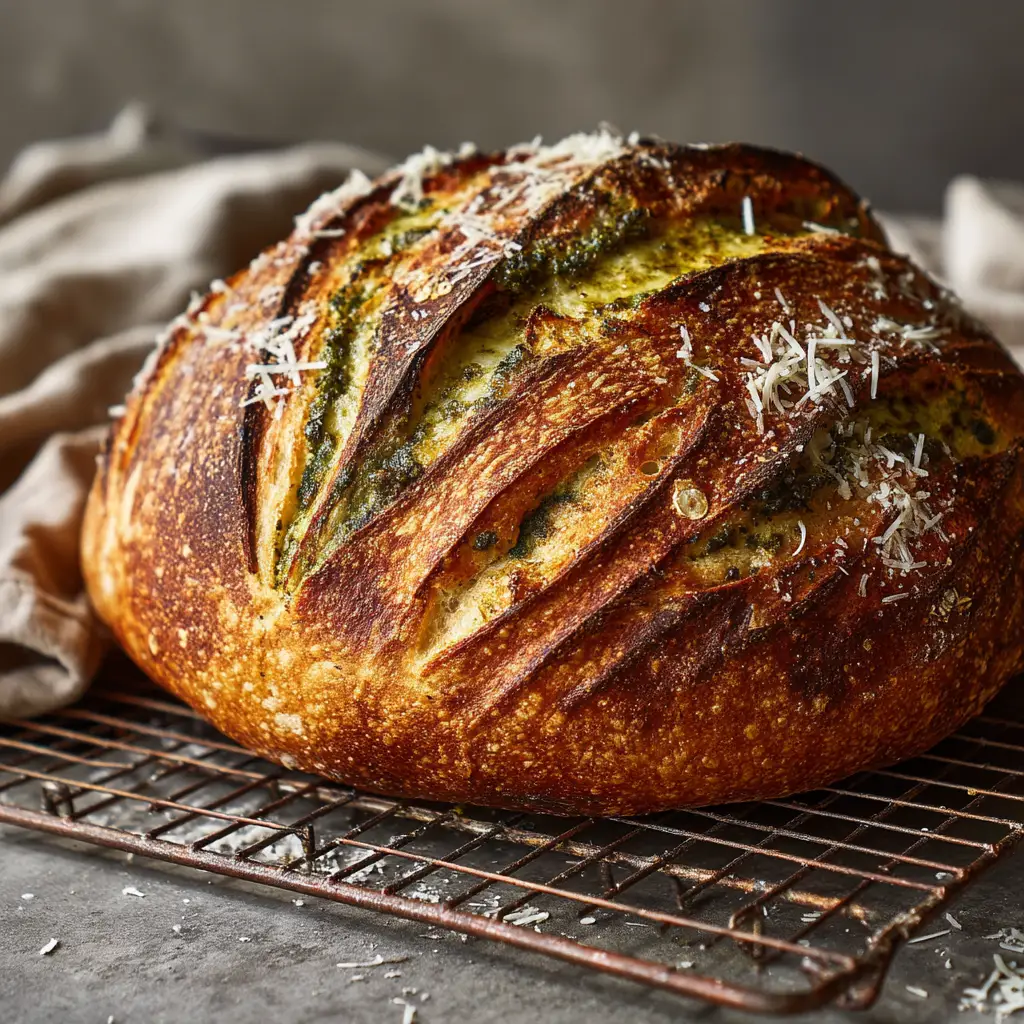
Towards the end of your bulk fermentation, when the dough is airy and has risen by about 30%, it’s time to add the fillings. Lightly flour your work surface and gently turn the dough out. Carefully stretch the dough into a large, thin rectangle. Spread the pesto evenly over the surface, then sprinkle the grated Parmesan on top. Fold the dough like a letter—one third over the middle, then the opposite third over that. Finally, roll it up into a tight log.
Step 5: Shaping and Cold Proofing
Gently shape the dough log into a tight boule (round) or batard (oval). Place it seam-side up in a well-floured banneton or a bowl lined with a floured tea towel. Cover the banneton and place it in the refrigerator for a cold proof of 12-24 hours. This develops the classic sourdough flavor.
Step 6: Scoring and Baking
Preheat your oven with a Dutch oven inside to 500°F (260°C). Once preheated, carefully remove the hot Dutch oven. Turn your cold dough out onto a piece of parchment paper, and with a sharp blade or lame, score the top. A simple cross or a single long slash works well. Lower the dough into the Dutch oven, cover it, and bake for 20 minutes. Then, remove the lid, reduce the oven temperature to 450°F (230°C), and bake for another 20-25 minutes, or until the crust is deeply golden brown.
Tips for the Perfect Cheesy Sourdough
- Use Thick Pesto: A watery pesto can make the dough too wet and difficult to handle. If your pesto is thin, consider adding more Parmesan to it to thicken it up.
- Don’t Overdo the Filling: It can be tempting to load up on pesto and cheese, but too much filling can compromise the bread’s structure and oven spring.
- A Cold Dough is Easier to Score: Scoring directly from the fridge helps you get a cleaner, more precise cut.
- Let It Cool Completely: This is the hardest part! You must let the loaf cool for at least 2-4 hours before slicing. This allows the internal crumb to set properly.
Choosing Your Pesto: Homemade vs. Store-Bought
While a high-quality store-bought pesto works wonderfully, making your own gives you complete control over the flavor and consistency. A traditional basil pesto is classic, but feel free to experiment with sun-dried tomato pesto or a kale-walnut pesto for a unique twist. The key is ensuring it’s not too oily.
How to Serve Your Sourdough
This Pesto Parmesan Sourdough is a star on its own, but it also pairs beautifully with a variety of dishes. Try it toasted and topped with a fried egg for an incredible breakfast, or serve it alongside a hearty bowl of crockpot beef stew. It’s also the perfect bread for a gourmet sandwich; we love it with prosciutto and fresh mozzarella. For a quick and delicious meal, these chicken thigh osso bucco are a fantastic pairing.
Frequently Asked Questions
Yes, this recipe is very adaptable! Try adding chopped walnuts or pine nuts to the filling for extra texture. You could also swap the Parmesan for Asiago or Pecorino Romano for a slightly different flavor profile.
Absolutely! A high-quality, thick store-bought pesto works wonderfully. Look for one that is more of a paste than oily to prevent the dough from becoming too wet.
The key is to create a tight seal during the shaping process. After laminating and rolling the dough into a log, ensure you pinch the seams together firmly. A tight shape will help hold all the delicious fillings inside.
Once completely cooled, store the loaf in a paper or cloth bread bag at room temperature for up to 3 days. Avoid plastic bags which can trap moisture and soften the crust. Do not refrigerate it, as this can make it go stale faster.
This can happen for a few reasons. The most common are over-proofing the dough, adding too much filling which weighs the dough down, or using a pesto that is too wet, which can inhibit gluten development. Ensure your starter is very active for a strong rise.
Storing Your Homemade Sourdough
Store your cooled loaf in a bread bag or a tea towel at room temperature for up to 3 days. Avoid the refrigerator, as it can cause the bread to stale faster. For longer storage, slice the loaf and freeze it in an airtight bag for up to 3 months.
Share Your Creations!
Baking this Pesto Parmesan Sourdough is such a rewarding experience, and I can’t wait to see your beautiful loaves! If you try this recipe, please leave a comment below or share a photo of your creation on Pinterest. Happy baking!
Pesto Parmesan Sourdough
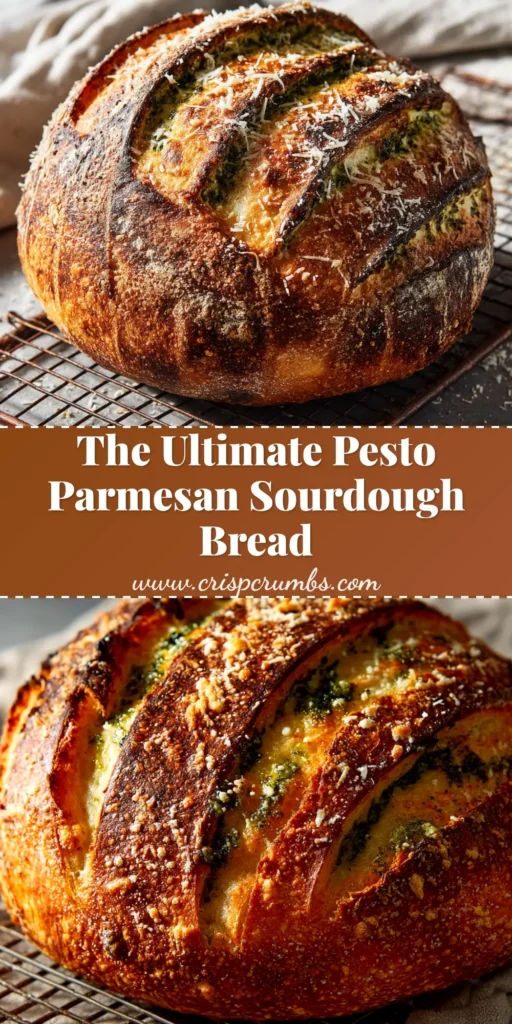
Pesto Parmesan Sourdough: The Ultimate Cheesy Artisan Loaf
Ingredients
Equipment
Method
- Feed your sourdough starter 4-6 hours before you plan to mix your dough, allowing it to double in size and become very active.
- In a large bowl, mix flour and warm water until no dry spots remain. Cover and let rest (autolyse) for 30-60 minutes. Add the active starter and salt, mixing thoroughly until incorporated.
- Perform a series of stretch and folds every 30-45 minutes for the first 2-3 hours of a 4-6 hour bulk fermentation. The dough will become smooth and elastic.
- Gently stretch the dough into a large rectangle. Spread the pesto evenly over the surface, then sprinkle with grated Parmesan. Fold the dough like a letter and roll it into a tight log.
- Shape the dough into a boule or batard and place it seam-side up in a well-floured banneton. Cover and refrigerate for a cold proof of 12-24 hours.
- Preheat oven and Dutch oven to 500°F (260°C). Score the cold dough, then bake in the covered Dutch oven for 20 minutes. Remove the lid, reduce heat to 450°F (230°C), and bake for another 20-25 minutes until deeply golden brown.
- Let the loaf cool completely on a wire rack for at least 2-4 hours before slicing. This is crucial for the crumb to set properly.
Notes
Ensure the loaf is completely cool before slicing to prevent a gummy texture.
Don't be afraid to get a deep, dark crust—that's where much of the flavor is!