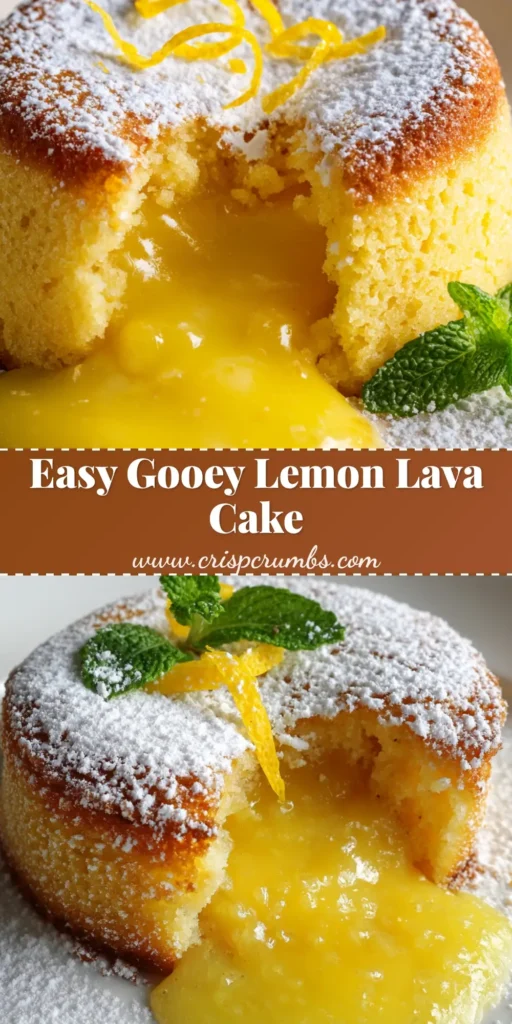
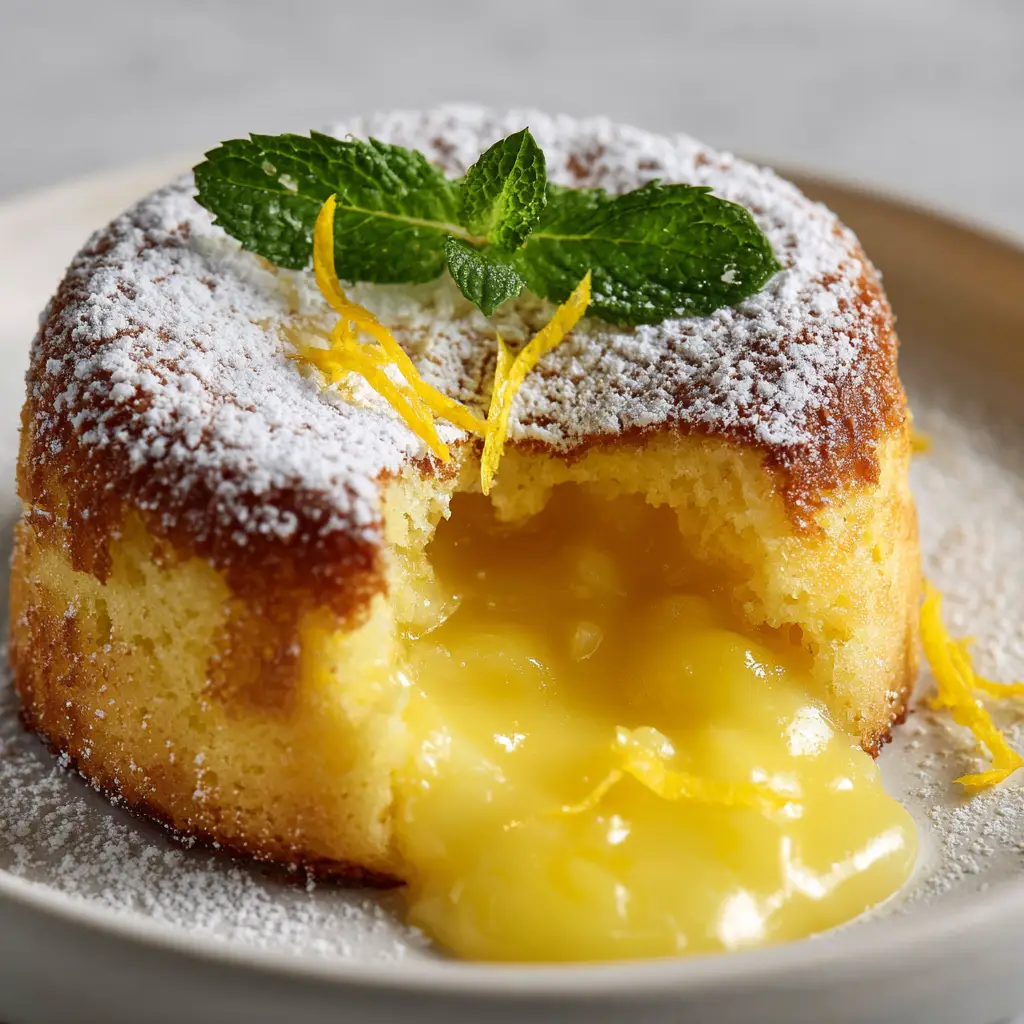
There is nothing quite as breathtaking as a perfectly executed Lemon Lava Cake. When you first slice into the soft, golden-baked crumb, you are instantly rewarded with a thick, vibrant yellow lemon curd center oozing heavily onto the plate. It is a dessert that demands attention and completely steals the spotlight.
Achieving this flawless structural contrast—a delicate, porous exterior hiding a molten, gooey core—requires a bit of culinary science. By freezing the citrus center before baking, we guarantee that the inside remains beautifully liquid while the outer sponge achieves that necessary golden-brown bake.
Whether you are hosting an elegant dinner party or craving an elevated weekend treat, this recipe delivers a visually stunning masterpiece. The sharp acidity of the citrus perfectly balances the rich, buttery cake, creating a refreshing yet decadent profile.
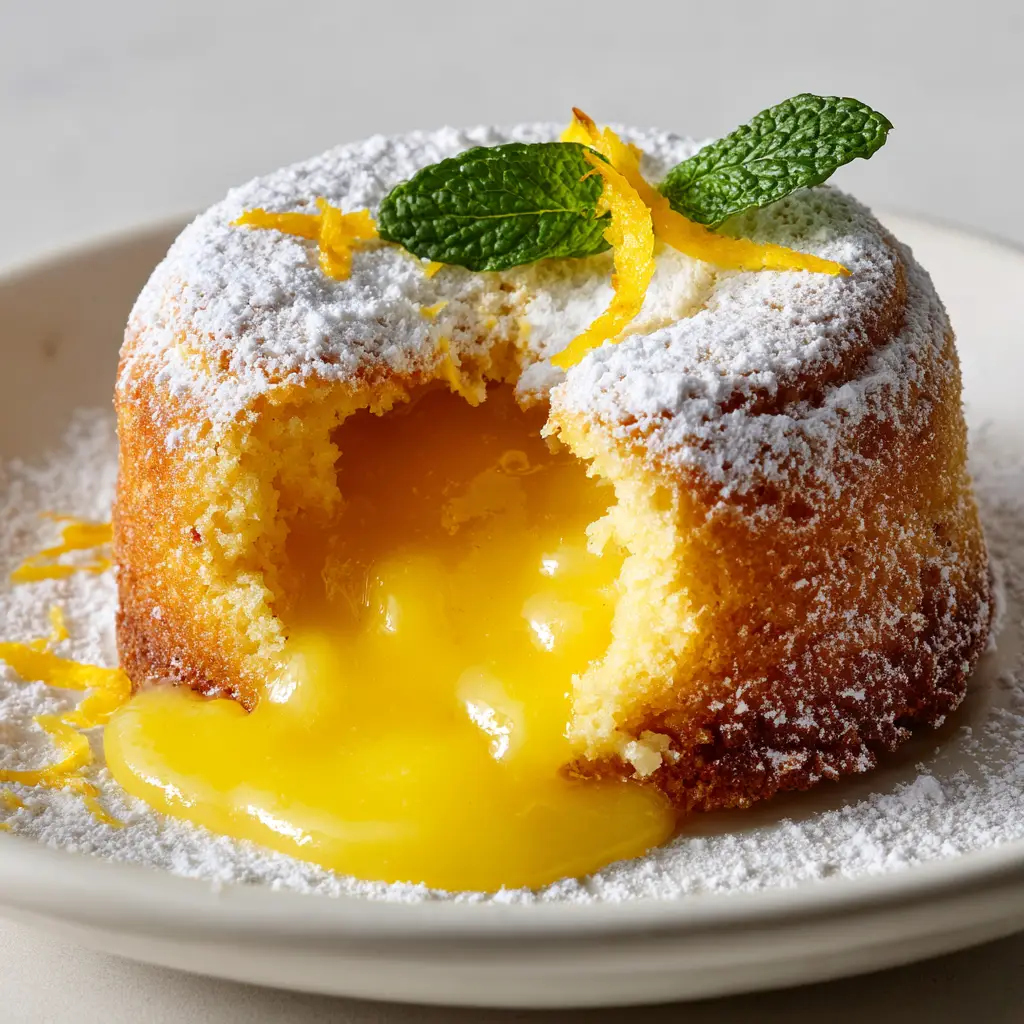
Sensory Cues: What Makes This Molten Lemon Dessert Extraordinary
- Vibrant Visual Contrast: The golden-baked sponge acts as the perfect canvas for the vivid, sunshine-yellow molten center that cascades onto the plate.
- Aromatic Citrus Notes: As the cake bakes, the essential oils from the fresh zest infuse the air, offering a bright, zesty fragrance that prepares the palate.
- Textural Perfection: You will experience the satisfying resistance of a slightly crisp edge giving way to a soft, porous crumb and an unctuously thick, gooey liquid core.
- Elegant Finishing Touches: A pristine dusting of white powdered sugar, a single fresh green mint leaf, and a delicate twist of bright yellow lemon zest provide professional-level plating.
Essential Components for a Bright, Oozing Citrus Center
Thick Lemon Curd: 1/2 cup (120ml)
This is the secret to our molten core. Freezing dollops of high-quality, thick lemon curd ensures the center remains flowing and intensely flavored after baking.
Unsalted Butter: 1/2 cup (113g)
Butter provides the necessary fat for a tender, luxurious sponge. Melting the butter ensures a dense yet delicate crumb structure that holds the molten center securely.
Granulated Sugar: 1/2 cup (100g)
Sugar not only sweetens the tart lemon notes but also aids in caramelization. It creates that beautiful golden-baked crust around the edges of your dessert.
Large Eggs and Egg Yolks: 2 whole eggs, 2 yolks
The extra yolks provide a rich, golden color and a velvety texture. They act as the primary structural binder for the porous sponge.
Fresh Lemon Zest and Juice: 1 tbsp (6g) zest, 1 tbsp (15ml) juice
Fresh citrus oils and juice amplify the flavor profile. They bridge the gap between the sweet exterior sponge and the tart, oozing interior.
All-Purpose Flour: 1/2 cup (60g)
Flour builds the essential gluten network. We use just enough to create a sturdy wall to house the liquid center without making the cake tough.
Baking Powder: 1/2 tsp (2g)
This invisible foundational ingredient provides the lift. It ensures the sponge remains light and airy rather than overly dense.
Kosher Salt: 1/4 tsp (1g)
Salt is a critical flavor enhancer. It tempers the sweetness and sharpens the bright citrus characteristics of the dessert.
Powdered Sugar, Mint, and Lemon Twists: For Garnish
A fine white powdered sugar dusting, a fresh green mint leaf, and a thin yellow lemon zest twist complete the visual blueprint. These elements transform a homemade bake into a bakery-worthy presentation.
Baking Gear Required for Structural Perfection
To construct the perfect Lemon Lava Cake, you need 6-ounce (175ml) ceramic ramekins. These ensure even heat distribution so the edges bake quickly while the core stays cool.
You will also need a silicone spatula for gently folding the batter. Overmixing activates too much gluten, which can result in a rubbery texture instead of a soft, porous sponge.
Finally, keep a fine-mesh sieve on hand. This tool is non-negotiable for achieving that even, snowy dusting of powdered sugar over the warm crust.
Step-by-Step Construction of the Oozing Lemon Sponge
Freezing the Citrus Core
Begin by lining a small plate with parchment paper. Spoon 2 tablespoon (30ml) dollops of thick lemon curd onto the paper, forming four distinct mounds.
Place the plate in the freezer for at least 1 hour. The curd must be completely frozen solid; this is the mandatory culinary technique that prevents the vibrant yellow center from baking into the sponge.
Preparing the Ramekins and Oven
Preheat your oven to 400°F (200°C). The high heat is required to flash-bake the exterior while leaving the frozen core perfectly gooey.
Generously coat the inside of four 6-ounce (175ml) ramekins with softened butter. Dust the insides with a pinch of granulated sugar, tapping out the excess, to help the cakes climb the walls and release flawlessly later.
Whipping the Golden Sponge Batter
In a large bowl, vigorously whisk together the melted unsalted butter and granulated sugar until it becomes a smooth, pale paste. Add the whole eggs and egg yolks one at a time, beating well after each addition.
Stir in the fresh lemon juice and zest. The mixture will smell highly aromatic and take on a sunny, golden hue.
Gently fold in the all-purpose flour, baking powder, and kosher salt using a silicone spatula. Mix only until the dry streaks disappear to maintain a soft, tender crumb.
Assembling and Baking to a Perfect Crumb
Divide half of the golden batter evenly among the prepared ramekins. Retrieve your frozen lemon curd discs and press one gently into the center of each ramekin.
Cover the frozen cores with the remaining batter, ensuring the yellow curd is entirely encased. Place the ramekins on a baking sheet and bake for 13 to 15 minutes.
Watch for specific visual cues: the edges should be golden-baked and set, but the very center should still exhibit a slight jiggle when tapped. Do not overbake.
Unmolding and Garnishing for the Final Reveal
Remove the cakes from the oven and let them rest in their ramekins for exactly 2 minutes. Carefully run a thin knife around the edges to loosen the sponge.
Invert each cake onto a minimalist white ceramic dessert plate. Immediately tap a fine-mesh sieve to coat the warm top with a fine dusting of white powdered sugar.
Gently place a single fresh green mint leaf and a thin twist of bright yellow lemon zest next to the slice line. Serve immediately to ensure the thick, vibrant center oozes heavily onto the plate when cut.
Troubleshooting Your Molten Baking Process
- Center Absorbed into Cake: If your center isn’t oozing, your lemon curd likely wasn’t frozen solid. Ensure it spends at least a full hour in the deep freeze.
- Cakes Won’t Release: Always use a combination of heavy butter and granulated sugar to coat your ramekins. This creates a non-stick barrier that also adds a subtle crunch.
- Spongy, Tough Cake: Do not overmix the batter once the flour is added. Fold gently just until the invisible dry ingredients are incorporated.
- Overbaked Core: Oven temperatures vary. Test bake a single cake first at 13 minutes to dial in the perfect timing for your specific oven.
How to Store and Rejuvenate Leftover Molten Cakes
These cakes are truly best enjoyed fresh from the oven to experience the optimal temperature contrast. However, you can store unbaked, assembled ramekins in the refrigerator for up to 24 hours.
If baking from the fridge, simply add 2 to 3 minutes to your total baking time. Fully baked leftovers can be refrigerated in an airtight container for 3 days.
To reheat, microwave a baked cake on a microwave-safe plate for 15-20 seconds. It will restore the gooey center, though the exterior will lose its slight crispness.
Delightful Pairings to Complete Your Dessert Spread
While this vibrant dessert stands brilliantly on its own, pairing it with complementary textures can elevate your dinner party. If you are serving a grand feast, you might want a varied dessert table.
For a stunning contrast, offer some delicate raspberry vanilla cream crepes alongside your cakes. The berry notes cut through the rich citrus beautifully.
If you prefer creamy textures to contrast the porous sponge, preparing creme brulee cheesecake cupcakes offers a magnificent vanilla bean pairing.
For chocolate lovers who need an alternative to lemon, a chocolate orange layer cake provides a rich, dark counterpart. Alternatively, a quick peanut butter cup dump cake (coming soon) is a fantastic, low-effort secondary option.
Curious About Citrus Lava Cakes?
While 6-ounce ceramic ramekins are highly recommended for optimal heat distribution, a standard muffin tin can work in a pinch. You will need to heavily grease the cups and reduce the baking time slightly as the metal conducts heat faster.
Yes. You can assemble the raw batter and frozen curd in the ramekins and store them in the refrigerator for up to 24 hours. When baking straight from the fridge, add 2 to 3 extra minutes to the baking time.
Absolutely. High-quality, thick store-bought lemon curd works perfectly for the molten center and saves preparation time while delivering a vibrant yellow color and intense citrus flavor.
The exterior edges should look golden-brown and fully set, pulling away slightly from the sides of the ramekin. The very center of the cake top should still exhibit a slight jiggle when tapped.
If the center absorbed into the sponge, the lemon curd was likely not frozen solid before baking. Ensure the curd spends at least a full hour in the freezer. Additionally, overbaking the cakes by even a minute can cause the center to set.
Printable Golden Lemon Molten Cake Recipe
The Ultimate Lemon Lava Cake: A Golden Molten Citrus Dream
Ingredients
Equipment
Method
- Spoon 2 tablespoon (30ml) dollops of thick lemon curd onto a parchment-lined plate. Freeze for at least 1 hour until completely solid.
- Preheat oven to 400°F (200°C). Coat four 6-ounce (175ml) ramekins with softened butter and dust the insides with a pinch of granulated sugar.
- Whisk melted unsalted butter and granulated sugar until pale. Add whole eggs and yolks one at a time. Stir in fresh lemon juice and zest.
- Gently fold in all-purpose flour, baking powder, and kosher salt until just combined. Do not overmix.
- Divide half the batter into the ramekins. Press one frozen lemon curd disc into the center of each, then cover with the remaining batter.
- Bake for 13 to 15 minutes until the edges are golden but the center still has a slight jiggle.
- Rest for 2 minutes. Invert onto a plate, dust with powdered sugar, and garnish with a fresh mint leaf and a twist of lemon zest.
Notes
Oven temperatures vary; consider doing a test bake with a single ramekin to find the perfect timing for an oozing center.
Join Our Baking Community and Share Your Results
There is immense satisfaction in watching that vibrant yellow lemon curd center oozing heavily onto the plate for the first time. It is a culinary triumph that deserves to be celebrated.
If you achieved the perfect golden-baked sponge, let us know! Leave a five-star review in the comments below, and don’t forget to subscribe to our weekly newsletter for more stunning dessert blueprints.
Be sure to snap a photo of your flawless white powdered sugar dusting and share it with us on Pinterest!