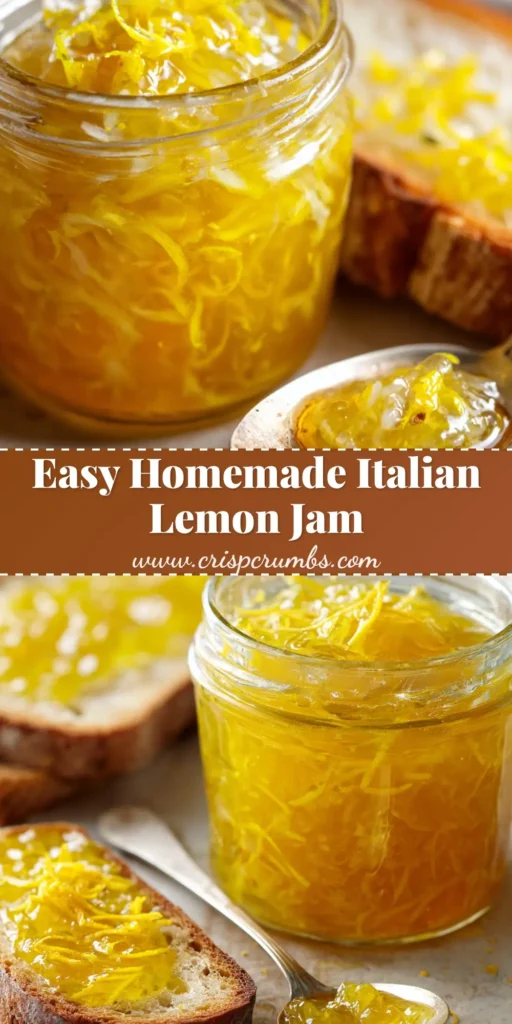
There’s nothing quite like the vibrant, sun-kissed flavor of homemade lemon jam. Imagine a dollop of glistening, translucent jam, generously spread over a thick slice of warm, toasted artisan bread. It’s a simple luxury that can brighten any morning.
This recipe captures that exact moment. We’re not just making a simple spread; we’re creating a jar of pure sunshine, complete with tender, thinly sliced lemon rinds and beautiful flecks of bright yellow zest suspended in a perfectly sweet, sticky jam.
Forget the store-bought versions. This homemade lemon jam delivers an intense, pure citrus flavor that is both deeply satisfying and incredibly fresh. Let’s walk through how to create this beautiful and delicious pantry staple.
Why You’ll Love This Recipe
- Intense, Pure Flavor: By using the entire lemon—zest, juice, and rind—this recipe creates a jam with an unparalleled depth of bright, zesty citrus flavor that you just can’t buy in a store.
- Beautiful, Rustic Appearance: The final product looks exactly like it came from a farmhouse kitchen, with a gorgeous translucent yellow color, studded with tender rind slices and vibrant zest, just as promised.
- Perfectly Sweet & Sticky Texture: We’ll show you how to cook the jam to the perfect gel stage, resulting in a glistening, sticky-sweet spread that’s ideal for toast, scones, or even as a glaze for meats.
- No Pectin Needed: Lemons are naturally rich in pectin, so you don’t need to add any commercial setting agents. This recipe relies on the fruit’s natural properties for a perfect set every time.
Ingredients & Substitutions
Lemons: About 2 lbs (900g) of fresh lemons are the star of the show. They provide the juice for the base, the zest for aromatic top notes, and the rind for that classic marmalade-style texture. Look for lemons with bright, unblemished skin.
Granulated Sugar: You’ll need 4 cups (800g) of granulated sugar. Sugar is essential not only for sweetness but also for acting as a preservative and helping the jam to achieve its thick, gelled consistency.
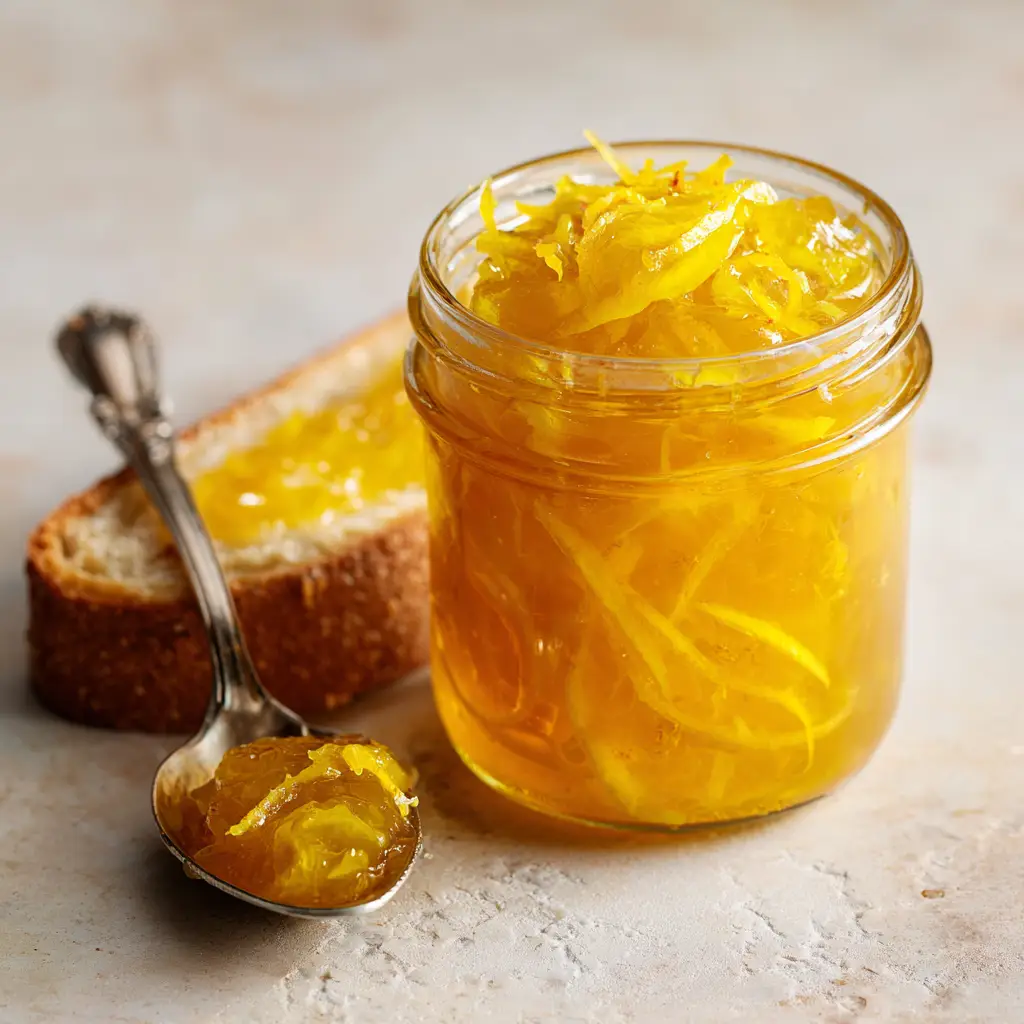
Water: 5 cups (1.2L) of water is used in two stages. First, to soften the rinds and remove excess bitterness, and second, to create the syrup base with the sugar and lemon juice.
Fine Sea Salt: Just a small pinch, about 1/4 tsp (1g). This is a foundational ingredient that might seem counterintuitive, but it actually enhances the lemon’s flavor and balances the overall sweetness of the jam.
Equipment Needed
- Large, heavy-bottomed pot or Dutch oven
- Sharp chef’s knife
- Cutting board
- Microplane or zester
- Juicer
- Measuring cups and spoons
- Canning jars and lids, sterilized
- Ladle
Step-by-Step Instructions
Follow these steps carefully to achieve that perfect, glistening jam seen in the pictures. We’ll focus on the visual and sensory cues to guide you.
Phase 1: Prepare the Lemons
First, thoroughly wash and dry all the lemons. Using a microplane, zest two of the lemons and set the bright yellow zest aside. This will be added at the end to preserve its fresh, aromatic oils.
Next, slice all the lemons, including the zested ones, into very thin rounds, about 1/8-inch (3mm) thick. As you slice, remove and discard any seeds. Consistency in your slices is key to achieving that uniform texture in the final jam.
Finally, juice half of the lemon slices by squeezing them firmly. Reserve the juice and the remaining half of the lemon slices. This combination gives you both the liquid base and the tender rind pieces.
Phase 2: Soften the Rinds
Place the reserved lemon slices (the ones you didn’t juice) into your large pot. Cover them with 4 cups (960ml) of water. Bring the water to a rolling boil over high heat.
Let the slices boil for about 10 minutes. You will notice the rinds starting to soften and turn slightly translucent. This step is crucial for creating “tender, thinly sliced, cooked lemon rinds” and removing any harsh bitterness from the pith.
Drain the water from the pot, leaving the softened lemon slices behind. The kitchen should smell incredible at this point—a bright, clean citrus aroma.
Phase 3: Cook the Jam
Return the pot with the drained lemon slices to the stove. Add the reserved lemon juice, the 4 cups (800g) of granulated sugar, and the remaining 1 cup (240ml) of water. Stir everything together over medium-high heat until the sugar is completely dissolved.
Bring the mixture to a strong boil, stirring occasionally. The mixture will be quite thin and watery at first, but as it cooks, you will see a dramatic transformation. It will begin to thicken, and the bubbles will become smaller and more vigorous.
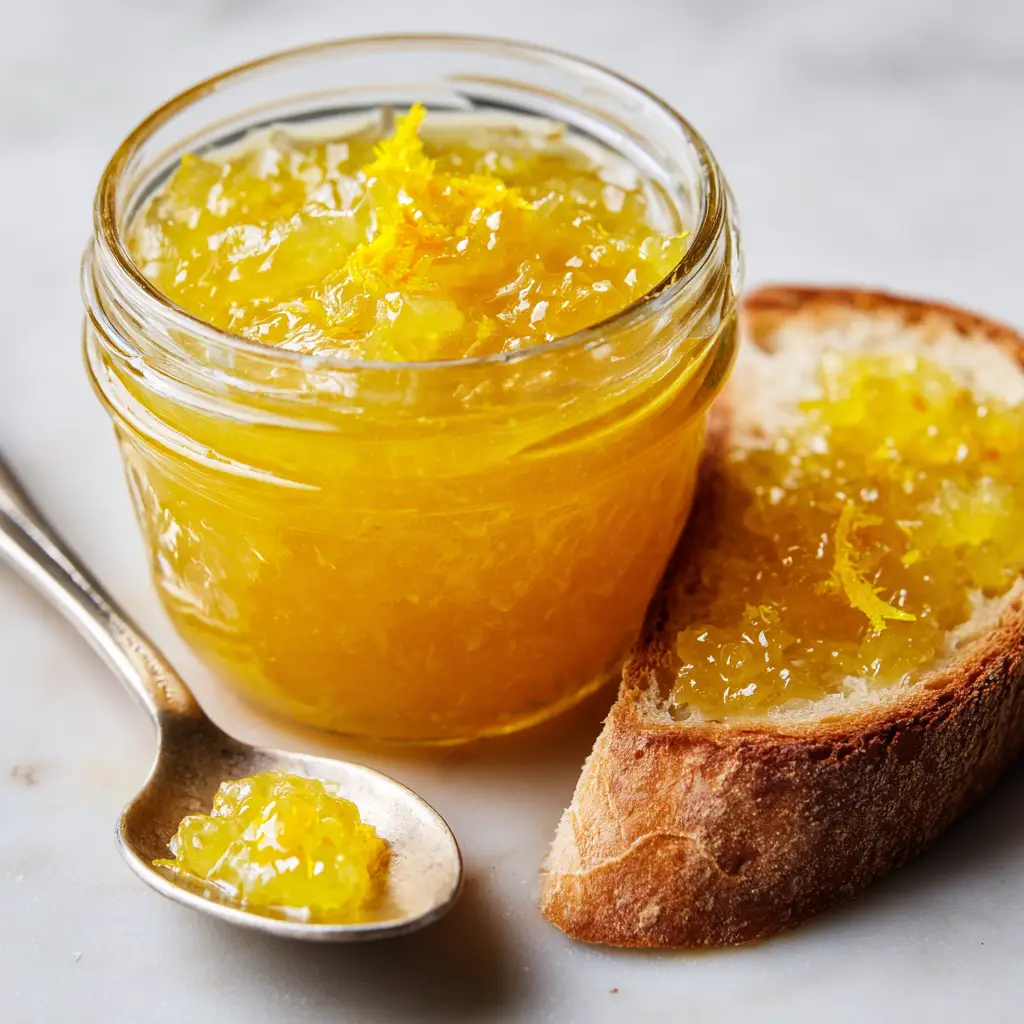
Continue to cook, stirring more frequently to prevent scorching, for about 25-35 minutes. The color will deepen slightly into a beautiful, translucent yellow.
Phase 4: Test for the Gel Stage
This is the most critical step to get that “sticky sweet jam dollop” consistency. Before you start cooking, place a few small plates in your freezer. To test for doneness, turn off the heat and spoon a small amount of jam onto one of the cold plates. Return it to the freezer for 1-2 minutes.
Remove the plate and push the edge of the jam with your finger. If the surface wrinkles and holds its shape, it has reached the gel stage. If it’s still runny, return the pot to the heat and cook for another 5 minutes before testing again. For those using a thermometer, the target temperature is 220°F (105°C).
Phase 5: Finish and Jar
Once the jam has reached the gel stage, remove it from the heat. Stir in the bright yellow lemon zest you reserved earlier. Adding it now, off the heat, preserves its vibrant color and fresh flavor, giving you those beautiful “zest flecks.”
Carefully ladle the hot jam into your warm, sterilized canning jars, leaving about 1/4-inch (6mm) of headspace at the top. Wipe the rims of the jars with a clean, damp cloth, place the lids on, and screw on the bands until they are fingertip tight.
If you plan to store the jam long-term, process the jars in a water bath canner for 10 minutes. Otherwise, let the jars cool completely on the counter before storing them in the refrigerator for up to a month.
Expert Tips for Success
- Don’t Skip the Boil: Boiling the lemon slices in water first is the secret to tender, non-bitter rinds. It makes all the difference in the final texture.
- Use a Wide Pot: A wider pot provides more surface area, which helps the water evaporate more quickly and allows the jam to set faster.
- Be Patient with the Set: The jam will look quite loose when it’s hot. It thickens significantly as it cools, so trust the cold plate test.
- Avoid Overcooking: Cooking the jam for too long can result in a texture that is too thick and gummy, and it can cause the sugar to caramelize, darkening the beautiful yellow color.
Storage
For long-term storage, properly sealed jars of lemon jam can be stored in a cool, dark place like a pantry for up to one year. Make sure you hear the “pop” of the lid sealing as the jars cool.
Once a jar is opened, it must be kept in the refrigerator. An opened jar of homemade lemon jam will stay fresh and delicious for about 1-2 months.
What to Serve With This
While this jam is a star on a thick slice of sourdough focaccia or artisan toast, its uses are incredibly versatile. Try a spoonful on top of a warm butter pecan loaf cake to add a bright, citrusy counterpoint.
For a savory twist, use it as a glaze for chicken or pork. It would be a fantastic finish for our pork tenderloin with dijon sauce. You can even mix it with a bit of soy sauce for a glaze reminiscent of our homemade teriyaki sauce.
Frequently Asked Questions
Absolutely! This method works well for other citrus fruits like oranges, limes, or grapefruit to create different types of marmalade. You may need to adjust the sugar level based on the sweetness of the fruit you choose.
No, this recipe does not require added commercial pectin. Lemons are naturally high in pectin, especially in their seeds and pith, which is enough to help the jam set beautifully.
The most reliable method is the cold plate test. Before you start cooking, place a few small plates in your freezer. To test for doneness, drop a small amount of jam onto a cold plate, wait 30 seconds, and then push it with your finger. If it wrinkles, it’s ready.
If properly canned and sealed in sterilized jars, the jam can last for up to one year in a cool, dark place. Once opened, it should be refrigerated and will last for about 1-2 months.
Bitterness usually comes from the pith (the white part of the rind). Our recipe includes a crucial step of boiling the lemon slices in water first, which helps to remove much of the bitterness and results in tender, flavorful rinds.
The Perfect Pantry Staple
This homemade lemon jam is more than just a recipe; it’s a technique that lets you capture the essence of fresh lemons in a jar. We hope you love making it and finding new ways to enjoy it!
If you tried this recipe, please leave a comment and rating below! For more delicious inspiration, be sure to follow us on Pinterest @CrispCrumbs.
Recipe Schema
The Ultimate Homemade Lemon Jam Recipe
Ingredients
Equipment
Method
- Thoroughly wash and dry all lemons. Zest two lemons and set the zest aside. Slice all lemons into very thin 1/8-inch (3mm) rounds, removing and discarding seeds as you go.
- Firmly squeeze half of the lemon slices to extract their juice. Reserve the juice and the remaining half of the lemon slices.
- Place the reserved, un-juiced lemon slices into a large pot with 4 cups (960ml) of water. Bring to a boil and cook for 10 minutes to soften the rinds and reduce bitterness.
- Drain the water from the pot, leaving the softened lemon slices behind.
- Return the pot to the stove. Add the softened lemon slices, reserved lemon juice, 4 cups (800g) of sugar, and the remaining 1 cup (240ml) of water. Stir over medium-high heat until sugar dissolves.
- Bring the mixture to a strong boil. Cook for 25-35 minutes, stirring more frequently as it thickens, until it reaches the gel stage.
- Perform the cold plate test. Place a spoonful of jam on a freezer-chilled plate. If it wrinkles when pushed after 1-2 minutes, it's ready. The target temperature is 220°F (105°C).
- Remove the pot from the heat and stir in the reserved lemon zest.
- Ladle the hot jam into warm, sterilized jars, leaving 1/4-inch headspace. Wipe rims, apply lids, and screw on bands until fingertip tight. Process in a water bath for 10 minutes for long-term storage.
Notes
Use a Wide Pot: A wider pot provides more surface area, which helps the water evaporate more quickly and allows the jam to set faster.
Be Patient with the Set: The jam will look quite loose when it's hot. It thickens significantly as it cools, so trust the cold plate test.
Avoid Overcooking: Overcooking can create a gummy texture and darken the jam's color. Watch it closely.