Welcome to the ultimate guide to the perfect, classic Greek Salad Recipe. Forget the sad, lettuce-filled versions you’ve seen elsewhere. We’re diving deep into the heart of Greek cuisine to create a Horiatiki, the traditional, rustic salad that bursts with fresh, vibrant flavor. This is the salad that will transport you straight to a sun-drenched taverna by the Aegean Sea. It’s simple, it’s refreshing, and it’s packed with wholesome ingredients.
This recipe is more than just a list of ingredients; it’s a celebration of simplicity and quality. The key is using the best, freshest produce you can find. Ripe, juicy tomatoes, crisp cucumbers, and a fantastic block of feta are non-negotiable for an authentic experience.
What Makes a Greek Salad Authentic?
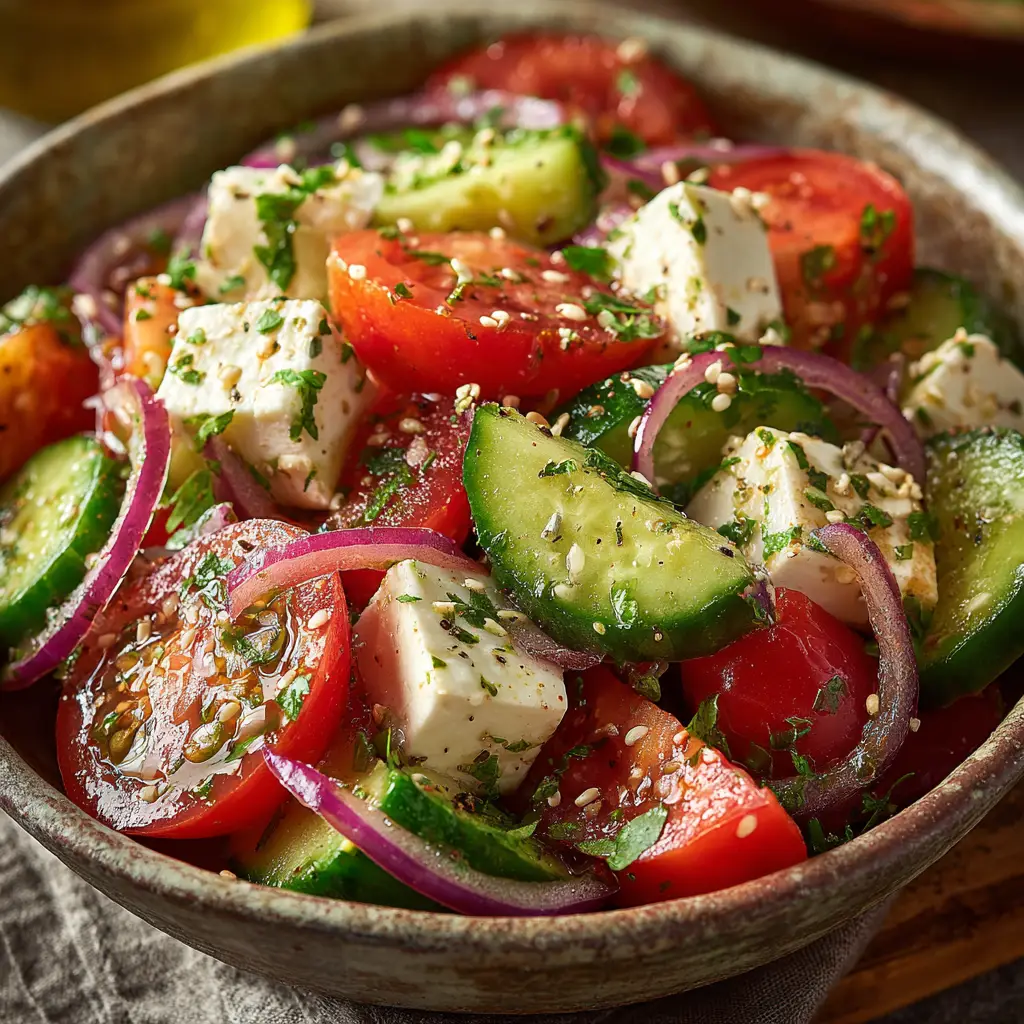
The soul of an authentic Greek salad, or Horiatiki, lies in its simplicity and the absence of lettuce. It’s a farmer’s salad, built on a foundation of fresh, seasonal vegetables. The classic combination includes juicy tomatoes, crisp cucumber, sharp red onion, and briny Kalamata olives. The crowning glory is a generous block of feta cheese, often served whole right on top, drizzled with exquisite Greek olive oil and a sprinkle of dried oregano. That’s it. No lettuce, no fancy additions, just pure, unadulterated flavor.
Why You’ll Love This Greek Salad Recipe
- Incredibly Fresh: This salad is the epitome of freshness, with crisp vegetables and a zesty dressing that pops.
- Quick & Easy: With no cooking required, you can whip this up in about 15 minutes. It’s perfect for a quick lunch or a simple side dish.
- Healthy & Wholesome: Packed with vitamins, minerals, and healthy fats, it’s a dish you can feel great about eating.
- Versatile Side Dish: It pairs beautifully with almost any main course, from grilled chicken and fish to hearty roasted lamb.
The Key Ingredients for a Classic Greek Salad
The magic of this salad is in its high-quality components. There’s nowhere to hide, so using the best ingredients you can find will make all the difference. Here’s what you’ll need.
For the Salad
- Tomatoes: Use ripe, in-season tomatoes. Roma or vine-ripened tomatoes work beautifully.
- Cucumber: English or Persian cucumbers are best as they have thin skin and minimal seeds.
- Red Onion: Thinly sliced for a sharp, crisp bite that complements the other flavors.
- Kalamata Olives: Insist on authentic Kalamata olives for their rich, fruity flavor. Make sure they are pitted.
- Feta Cheese: This is the star. Buy a block of sheep’s milk feta packed in brine. It’s creamier and has a more complex flavor than pre-crumbled varieties.
For the Greek Salad Dressing
- Extra Virgin Olive Oil: A high-quality, cold-pressed Greek olive oil will elevate your dressing from good to spectacular.
- Red Wine Vinegar: Provides the perfect acidic tang to cut through the richness of the oil and feta.
- Dried Oregano: A sprinkle of dried Greek oregano is essential for that signature aromatic flavor.
- Sea Salt & Black Pepper: To taste, for seasoning.
How to Make the Perfect Greek Salad
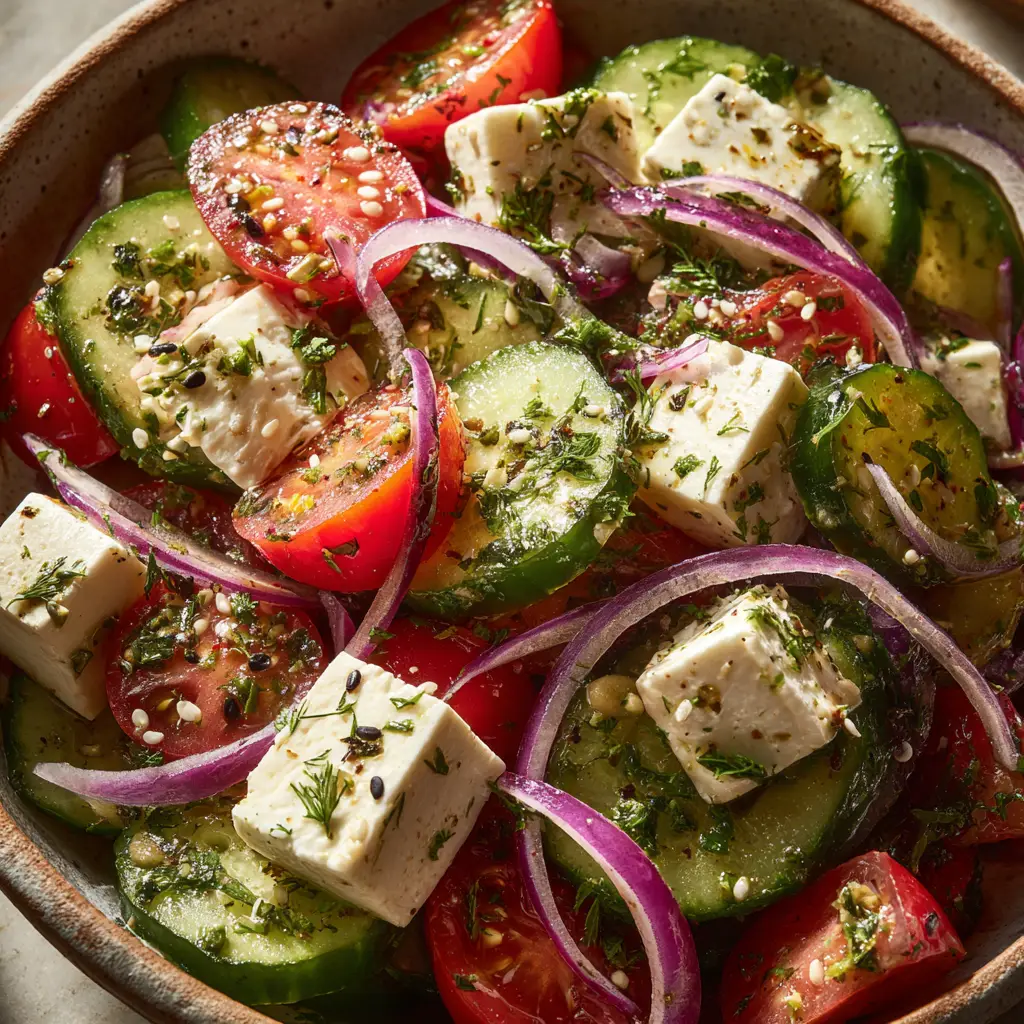
Crafting the perfect Greek Salad Recipe is all about the technique. We’re not just tossing ingredients in a bowl; we’re building layers of flavor and texture. Follow these simple steps for a flawless result.
Step 1: Prepare the Vegetables
Start by washing and drying all your produce. Chop the tomatoes into bite-sized wedges or chunks. Slice the cucumber into thick half-moons. Thinly slice the red onion. Combine the tomatoes, cucumber, and red onion in a large, shallow bowl.
Step 2: Make the Dressing
In a small bowl or jar, whisk together the extra virgin olive oil, red wine vinegar, and dried oregano. Season with a pinch of salt and a few grinds of black pepper. Remember that the feta and olives are already salty, so be mindful when adding salt. Whisk until the dressing is emulsified.
Step 3: Assemble the Salad
Pour about half of the dressing over the vegetables in the bowl and toss gently to coat. Add the Kalamata olives. Now, place the block of feta cheese right on top of the salad. Drizzle the remaining dressing over the feta and the rest of the salad. Finish with another sprinkle of dried oregano over the cheese.
Tips for the Best Horiatiki Salad
- Don’t Crumble the Feta: Serving the feta as a whole block is traditional and allows everyone to break off as much as they’d like. It also prevents the salad from becoming watery.
- Cut Vegetables into Chunks: This is a rustic salad. Avoid dicing the vegetables too finely. Large, chunky pieces provide the best texture.
- Dress Just Before Serving: To keep the vegetables crisp and prevent them from becoming soggy, dress the salad right before you plan to eat it. For other fantastic salad ideas, check out this vibrant Feta and Cranberry Pasta Salad or a protein-packed Tuna Chickpea Salad.
What to Serve With Your Greek Salad
This versatile salad works as a light main course or a perfect side dish. It pairs wonderfully with grilled meats like chicken souvlaki or lamb chops. It’s also an excellent companion to baked fish or even a simple slice of crusty bread for soaking up the delicious juices at the bottom of the bowl. For a wonderful appetizer spread, consider serving it alongside some classic deviled eggs.
Variations and Additions
While the classic Horiatiki is perfect as is, you can certainly customize it. For a more substantial meal, consider adding grilled chicken, shrimp, or a scoop of chickpeas. Some modern variations also include green bell peppers or capers for an extra briny kick. However, to keep it authentic, we recommend sticking to the original formula.
Frequently Asked Questions
You can chop the vegetables a few hours ahead and store them in the fridge. However, for the best and crispest results, you should wait to add the dressing, olives, and feta cheese until just before serving.
No, a truly authentic Greek salad, known as Horiatiki, does not contain lettuce. It is a rustic salad made with chunks of tomato, cucumber, red onion, Kalamata olives, and a block of feta cheese.
Once dressed, a Greek salad is best eaten immediately. Leftovers can be stored in an airtight container in the refrigerator for up to 24 hours, but the vegetables will soften considerably.
A classic Greek salad dressing is very simple. It’s made from high-quality extra virgin olive oil, red wine vinegar, a generous amount of dried oregano, and a pinch of salt and pepper.
The best feta cheese is a block of sheep’s milk feta that has been packed in brine. This type is creamier, tangier, and has a more complex flavor than pre-crumbled cow’s milk feta.
Enjoy Your Perfect Greek Salad!
There you have it—a truly authentic Greek Salad Recipe that is simple, fresh, and unbelievably delicious. This recipe proves that you don’t need a long list of ingredients to create a memorable dish. We hope you love making and sharing this classic salad. If you do, please leave a comment below or share a photo of your creation on Pinterest!
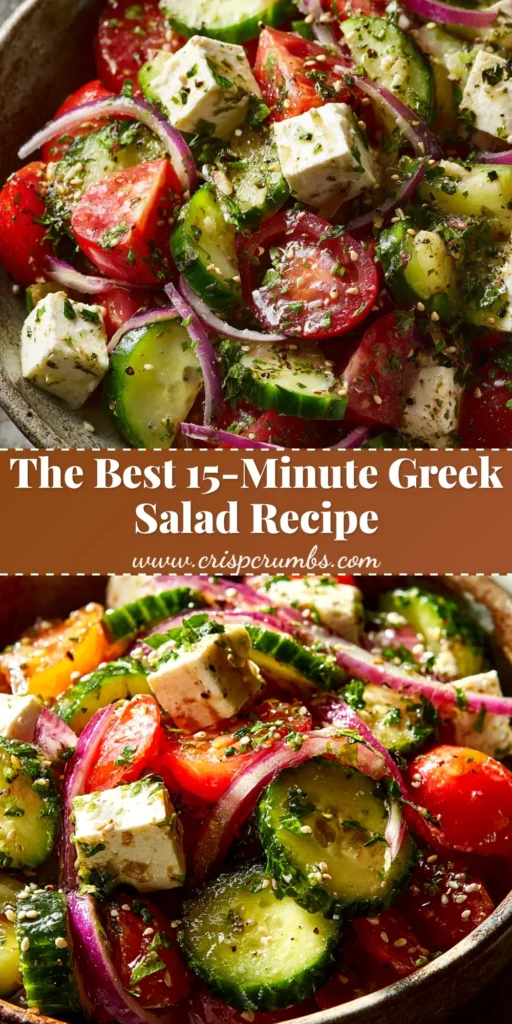
Greek Salad Recipe
Greek Salad Recipe: The Authentic Horiatiki You've Been Craving
Ingredients
Equipment
Method
- Wash and dry all produce. Chop the tomatoes into bite-sized wedges. Slice the cucumber into thick half-moons. Thinly slice the red onion. Combine the tomatoes, cucumber, and red onion in a large, shallow bowl.
- In a small bowl or jar, whisk together the extra virgin olive oil, red wine vinegar, and dried oregano. Season with a pinch of salt and black pepper to taste. Whisk until emulsified.
- Pour about half of the dressing over the vegetables and toss gently. Add the Kalamata olives. Place the block of feta cheese directly on top of the salad. Drizzle the remaining dressing over the feta and the salad. Garnish with an extra sprinkle of dried oregano.
- Serve immediately for the best texture and flavor. Enjoy!
Notes
Serving Suggestion: This salad is best served immediately while the vegetables are at their crispest.