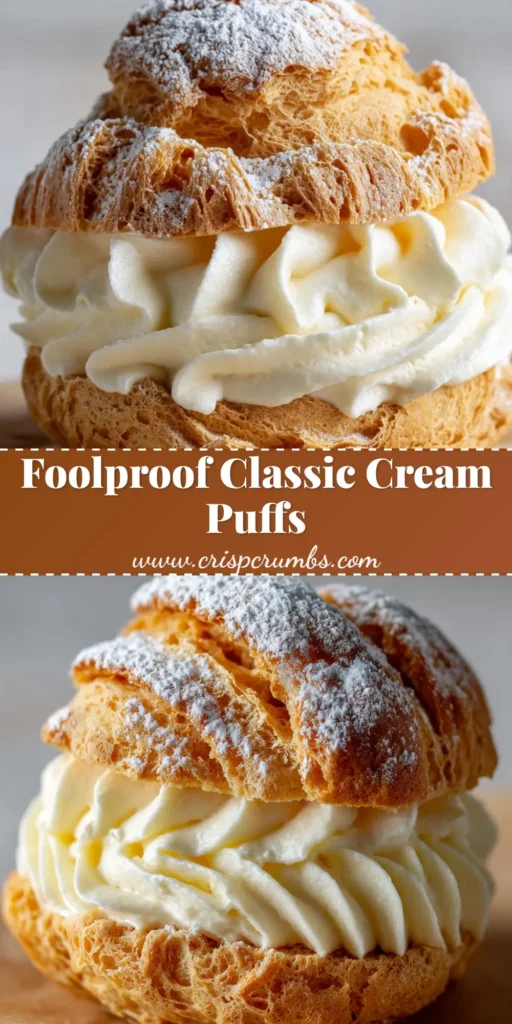
There’s a special kind of magic in a perfect cream puff. It begins with the delicate, crisp shell, a marvel of culinary science that puffs up to create a hollow, golden-brown sphere.
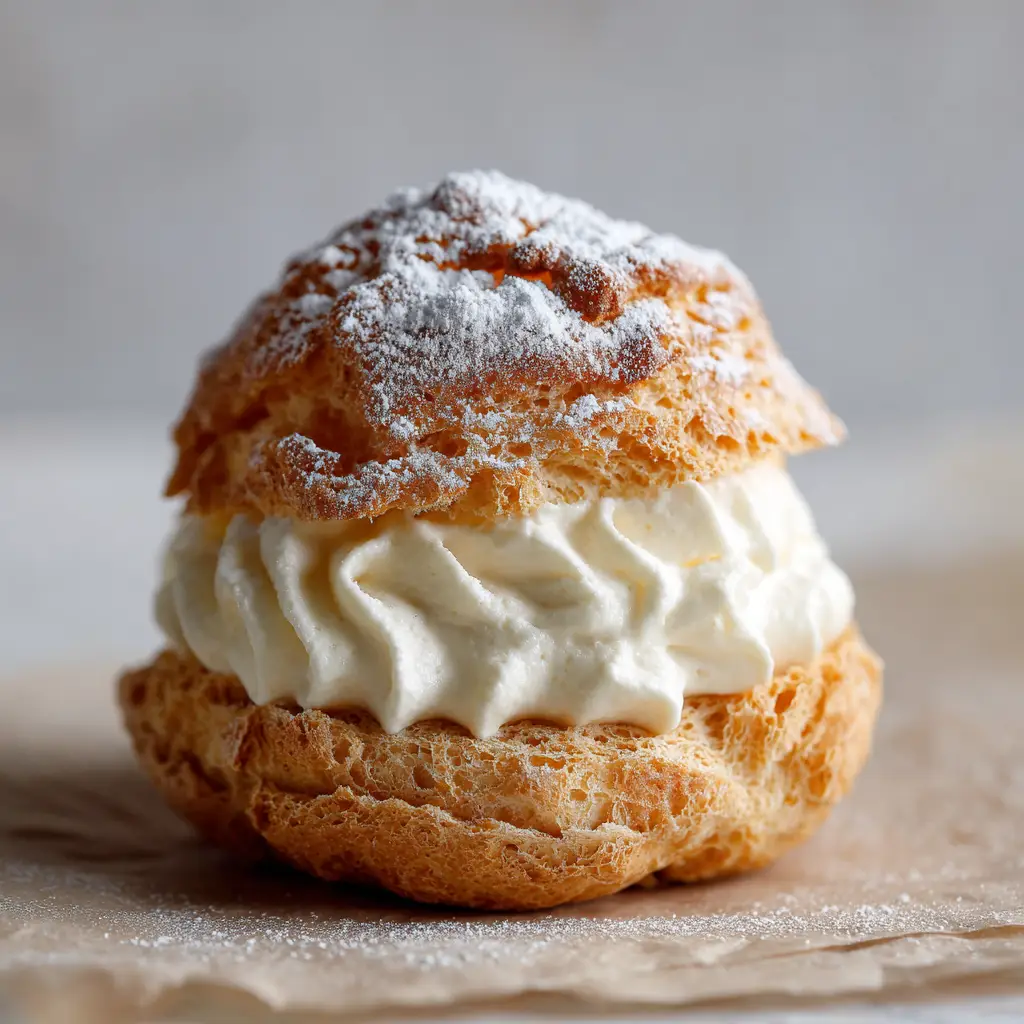
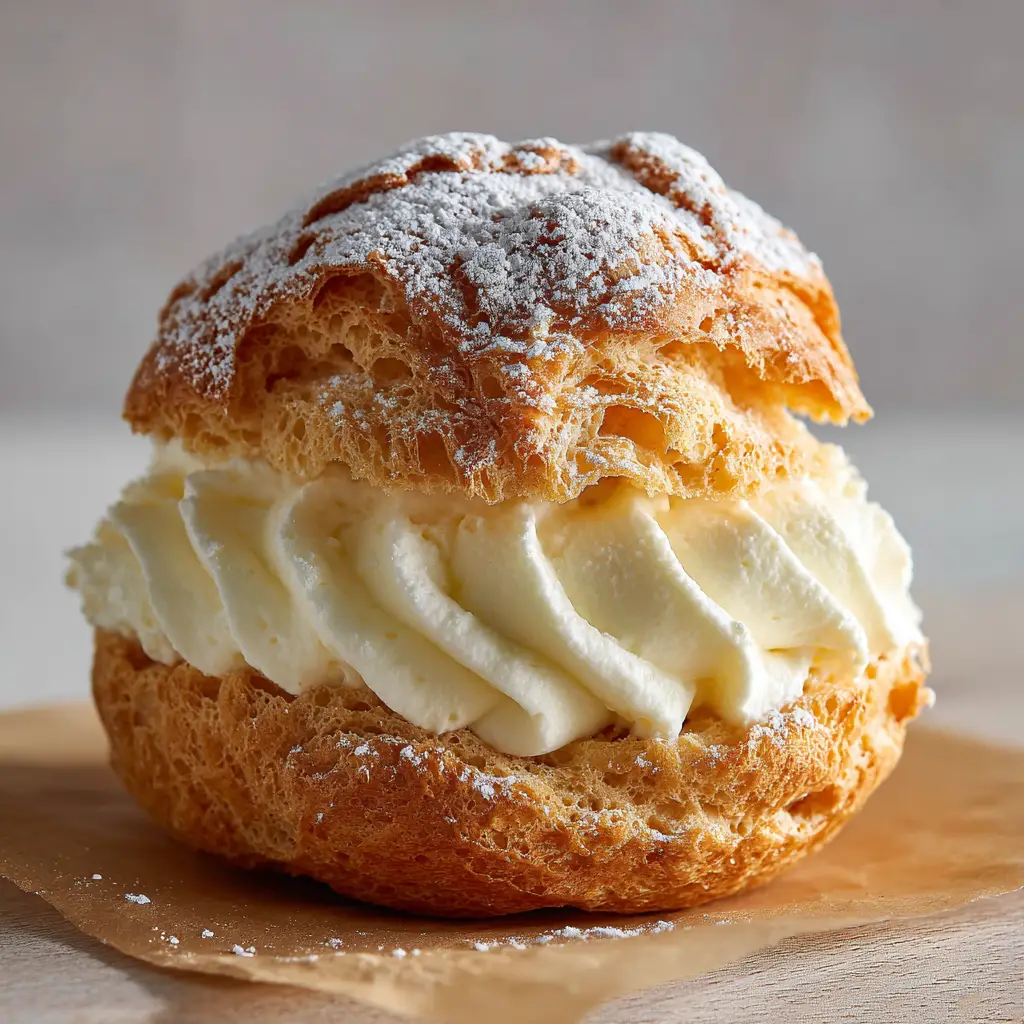
This recipe captures that exact moment, inspired by the image of a flawless cream puff: its craggy exterior giving way to a generous pile of thick, velvety white vanilla cream, with beautifully distinct piping ridges. A light dusting of powdered sugar completes the picture of pure, simple elegance.
We’re stripping away the intimidation and giving you a step-by-step guide to recreating this bakery-quality classic in your own kitchen. Prepare for a dessert that looks just as incredible as it tastes.
Why You’ll Love This Recipe
- Perfectly Puffed Shells: We’ll guide you through making Pâte à Choux, ensuring your pastry achieves that signature light, airy, and hollow interior with a crisp, golden-brown exterior.
- Velvety Vanilla Cream: The filling is a luxuriously thick and smooth pastry cream, stable enough to be piped with beautiful ridges, just like in a professional patisserie.
- Visually Stunning: Following these steps will help you create a dessert that is a true showstopper, perfect for impressing guests or simply treating yourself.
- Simple, Classic Ingredients: This recipe relies on pantry staples to create something truly extraordinary. No hard-to-find components, just pure culinary technique.
Ingredients & Substitutions
For the Choux Pastry Shells:
- Water: 1/2 cup (120ml). Water creates the steam that is essential for puffing up the pastry shells in the oven.
- Unsalted Butter: 1/2 cup (113g), cut into pieces. Butter adds richness, flavor, and contributes to the tender, crisp texture of the final baked shell.
- Granulated Sugar: 1 teaspoon (4g). A small amount of sugar adds a hint of flavor and helps with the golden-brown coloring.
- Salt: 1/4 teaspoon (1.5g). Salt is crucial for balancing the flavors in the dough.
- All-Purpose Flour: 1 cup (120g). Flour provides the structure for the choux pastry. It’s cooked with the liquids first to gelatinize the starches, which is a key step.
- Large Eggs: 4. Eggs are the primary leavening agent, providing the protein structure that allows the shells to hold their shape after the steam has done its work. They must be added one at a time.
For the Vanilla Cream Filling:
- Whole Milk: 2 cups (480ml). The base of our pastry cream. Whole milk provides the best flavor and creamy texture.
- Granulated Sugar: 1/2 cup (100g). Sweetens the cream and helps to stabilize the egg yolks.
- Cornstarch: 1/4 cup (28g). This is our thickening agent, ensuring the cream is firm enough to be piped and hold its shape.
- Large Egg Yolks: 4. Egg yolks add incredible richness, color, and flavor, and are essential for the custard’s texture.
- Unsalted Butter: 2 tablespoons (28g), softened. Whisked in at the end, butter provides a smooth, velvety mouthfeel.
- Vanilla Extract: 2 teaspoons (10ml). For that classic, aromatic vanilla flavor. Use pure vanilla extract for the best results.
For Dusting:
- Powdered Sugar: 2 tablespoons (16g). A fine dusting of powdered sugar is the classic finishing touch, adding a touch of sweetness and visual appeal.
Equipment Needed
- Medium Saucepan
- Stand Mixer with Paddle Attachment (or a bowl with a hand mixer)
- Piping Bags
- Large Round Piping Tip and a Large Star Piping Tip
- Baking Sheets
- Parchment Paper
- Fine-mesh Sieve
Step-by-Step Instructions
Part 1: Make the Vanilla Pastry Cream
First, we make the cream so it has ample time to chill and set properly. This is the secret to a thick, pipeable filling.
- In a medium saucepan, heat the milk over medium heat until it just begins to simmer around the edges. Don’t let it boil.
- While the milk is heating, whisk together the sugar, cornstarch, and egg yolks in a separate medium bowl until the mixture is pale yellow and smooth.
- Temper the eggs: Slowly pour about half of the hot milk into the egg yolk mixture, whisking constantly to prevent the eggs from scrambling. Pour the tempered egg mixture back into the saucepan with the remaining milk.
- Return the saucepan to medium heat and cook, whisking constantly and scraping the bottom and corners, until the cream thickens significantly. You’ll see it bubble; continue to whisk for another 60 seconds to cook out the starch taste. The texture should be like a thick pudding.
- Remove from heat and immediately stir in the softened butter and vanilla extract until fully combined.
- Strain the pastry cream through a fine-mesh sieve into a clean bowl to remove any lumps. Press a piece of plastic wrap directly onto the surface of the cream to prevent a skin from forming.
- Refrigerate for at least 4 hours, or until completely cold and firm.
Part 2: Prepare and Pipe the Choux Pastry
Now, we create the magical dough that will become our shells.
- Preheat your oven to 400°F (200°C). Line two baking sheets with parchment paper.
- In a medium saucepan, combine the water, butter, sugar, and salt. Bring to a rolling boil over medium-high heat.
- Once boiling, immediately remove the pan from the heat and add all the flour at once. Stir vigorously with a wooden spoon or spatula until a rough dough forms.
- Return the pan to low heat and cook, stirring constantly, for 1-2 minutes to dry out the dough. You’ll know it’s ready when a thin film forms on the bottom of the pan and the dough pulls together into a smooth ball.
- Transfer the dough to the bowl of a stand mixer fitted with the paddle attachment. Beat on low speed for 2 minutes to cool it down slightly. You don’t want to cook the eggs when you add them.
- With the mixer still on low, add the eggs one at a time, making sure each egg is fully incorporated before adding the next. The final dough should be smooth, thick, and glossy. It should hold its shape but be pipeable.
- Transfer the choux pastry to a piping bag fitted with a large round tip. Pipe 2-inch (5cm) mounds onto the prepared baking sheets, about 3 inches (7.5cm) apart. Use a wet fingertip to gently smooth down any peaks.
Part 3: Bake the Shells to Golden Perfection
This is where the magic happens. The high initial heat creates steam, and the lower temperature dries the shells out.
- Bake for 15 minutes at 400°F (200°C). DO NOT open the oven during this time.
- After 15 minutes, reduce the oven temperature to 350°F (175°C) and continue to bake for another 15-20 minutes.
- The shells are done when they are a deep golden brown, feel light, and sound hollow. This is a key visual cue; pale shells will deflate.
- Remove the baking sheet from the oven. Using a small sharp knife, carefully poke a small hole in the side or bottom of each shell to allow steam to escape. This helps prevent them from becoming soggy.
- Let the shells cool completely on a wire rack.
Part 4: Assemble Your Classic Cream Puffs
The final, rewarding step!
- Once the pastry cream is thoroughly chilled, transfer it to a bowl and whisk it vigorously to loosen it up and make it smooth and creamy again.
- Transfer the whipped pastry cream to a piping bag fitted with a large star tip.
- Once the choux shells are completely cool, use a serrated knife to carefully slice them in half horizontally.
- Generously pipe the vanilla cream onto the bottom half of each shell, creating those beautiful, thick ridges.
- Place the top half of the shell gently onto the cream.
- Just before serving, use a fine-mesh sieve to lightly dust the tops with powdered sugar.
Expert Tips for Success
- Don’t Open The Oven Door! Peeking into the oven while the shells are puffing can cause them to collapse. Wait until they are golden brown and firm before reducing the temperature.
- Ensure Your Cream is Cold: The pastry cream must be completely chilled and firm before you whip and pipe it. Warm cream will be runny and won’t hold its shape.
- Dry the Dough Properly: Cooking the flour-and-water paste for a minute or two on the stove is a critical step. It dries out the dough, allowing it to absorb more egg, which results in a better puff.
- Add Eggs Slowly: Make sure each egg is fully incorporated into the dough before adding the next. This ensures a stable, glossy, and perfectly textured choux pastry.
Storage Instructions
Cream puffs are best enjoyed the day they are made for the optimal contrast between the crisp shell and soft cream.
If you need to store them, it’s best to store the components separately. Keep the unfilled, cooled pastry shells in an airtight container at room temperature for up to 2 days. The pastry cream can be stored in the refrigerator for up to 3 days. Assemble just before serving.
What to Serve With This
While these Classic Cream Puffs are a stunning dessert on their own, they also pair beautifully with other treats. For a truly decadent dessert spread, consider serving them alongside some chewy Lemon Sugar Cookies or a rich Butter Pecan Loaf Cake.
If you love this style of baked dessert, you might also enjoy the caramelized sweetness of our Creme Brulee French Toast for a special occasion breakfast.
FAQ
Yes, you can prepare the components in advance. The unfilled choux shells can be stored in an airtight container at room temperature for up to 2 days. The pastry cream will keep in the refrigerator for up to 3 days. For the best texture, assemble the cream puffs just before you plan to serve them.
Absolutely! While classic vanilla pastry cream is traditional, you can fill choux shells with chocolate pastry cream, sweetened whipped cream, diplomat cream (a mix of pastry cream and whipped cream), or even ice cream for profiteroles.
Look for visual and sensory cues. The shells should be a deep golden brown, not pale blonde. They should feel very light and airy when you lift one, and the exterior should be dry and crisp. If they seem soft or doughy, they need more time in the oven at the lower temperature to dry out.
They are very similar, as both are made from choux pastry. The main difference is typically in size and serving style. Cream puffs are generally larger and filled with pastry cream or whipped cream. Profiteroles are often smaller, filled with ice cream, and served with a chocolate sauce.
Cream puffs usually deflate for two reasons: they were underbaked, or the oven door was opened too early. Ensure the shells are a deep, uniform golden brown and feel firm and light before removing them from the heat. Poking a small hole in them right after baking also helps release steam and prevents them from getting soggy and collapsing.
Join the CrispCrumbs Community!
If you made this recipe, I’d love to hear from you! Please leave a comment and rating below. Your feedback is so helpful to me and other readers!
And don’t forget to follow us on Pinterest, @CrispCrumbs, for more delicious visual inspiration!
Schema
Classic Cream Puffs: A Foolproof Recipe for Golden Perfection
Ingredients
Equipment
Method
- In a medium saucepan, heat the milk over medium heat until it just begins to simmer. Do not boil.
- While the milk is heating, whisk together the sugar, cornstarch, and egg yolks in a separate bowl until pale and smooth.
- Temper the eggs: Slowly pour about half of the hot milk into the egg yolk mixture, whisking constantly. Pour the tempered egg mixture back into the saucepan.
- Return the saucepan to medium heat and cook, whisking constantly, until the cream thickens and bubbles. Continue to whisk for another 60 seconds.
- Remove from heat and stir in the softened butter and vanilla extract.
- Strain the pastry cream through a fine-mesh sieve into a clean bowl. Press plastic wrap directly onto the surface and refrigerate for at least 4 hours, or until completely cold.
- Preheat your oven to 400°F (200°C). Line two baking sheets with parchment paper.
- In a saucepan, bring the water, butter, sugar, and salt to a rolling boil.
- Remove from heat, add all the flour at once and stir vigorously until a dough forms.
- Return to low heat and cook, stirring, for 1-2 minutes to dry out the dough.
- Transfer the dough to a stand mixer bowl and beat on low for 2 minutes to cool slightly.
- Add eggs one at a time, mixing until fully incorporated before adding the next. The dough should be smooth and glossy.
- Transfer pastry to a piping bag with a round tip. Pipe 2-inch mounds onto the prepared baking sheets, 3 inches apart. Smooth down any peaks with a wet fingertip.
- Bake for 15 minutes at 400°F (200°C). Do not open the oven.
- Reduce oven temperature to 350°F (175°C) and bake for another 15-20 minutes until deep golden brown.
- Remove from oven and poke a small hole in each shell to release steam. Cool completely on a wire rack.
- Once chilled, whisk the pastry cream until smooth. Transfer to a piping bag fitted with a star tip.
- Slice cooled choux shells in half horizontally.
- Pipe the vanilla cream onto the bottom half of each shell.
- Place the top half of the shell onto the cream and dust with powdered sugar before serving.
Notes
Ensure Your Cream is Cold: The pastry cream must be completely chilled and firm before you whip and pipe it. Warm cream will be runny and won't hold its shape.
Dry the Dough Properly: Cooking the flour-and-water paste for a minute or two on the stove is a critical step. It dries out the dough, allowing it to absorb more egg, which results in a better puff.
Add Eggs Slowly: Make sure each egg is fully incorporated into the dough before adding the next. This ensures a stable, glossy, and perfectly textured choux pastry.