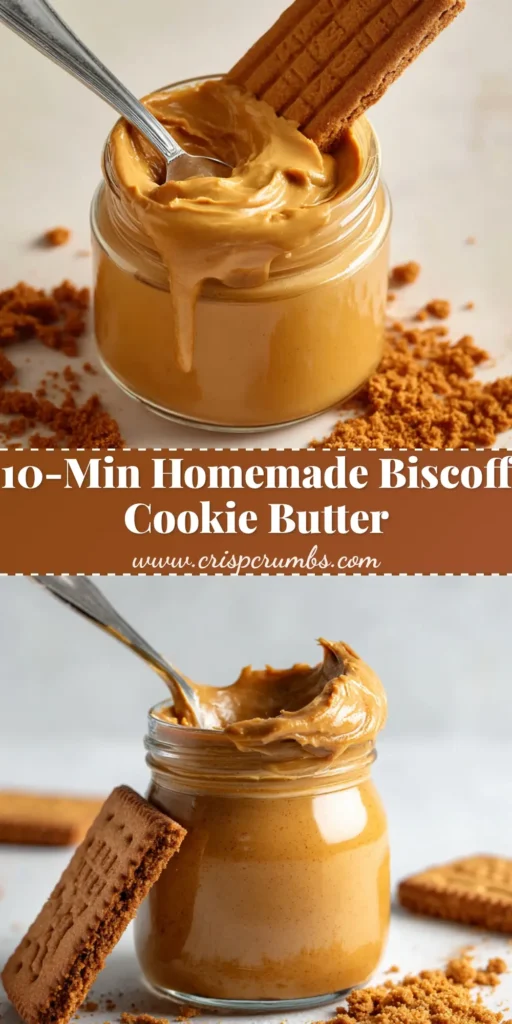
Have you ever dreamed of recreating that iconic, smooth golden-brown cookie butter spread right in your own kitchen? This completely from-scratch Biscoff cookie butter recipe is a total game-changer for dessert lovers everywhere. Imagine dipping a silver metal spoon into a small clear glass jar, pulling it out heavily coated in a thick, velvety spread.
That luxurious, creamy texture is exactly what we are achieving today with simple, pantry-staple ingredients. While store-bought versions are delicious, making it at home allows you to control the sweetness and texture perfectly. You can customize the consistency from a thick, spoonable paste to a silky drizzle.
This Biscoff cookie butter recipe is designed to deliver a sensory experience right from the start. From the aroma of caramelized spices to the visual appeal of scattered finely crushed baked cookie crumbs around your serving dish, it is pure culinary magic. Let’s dive into the ultimate guide for crafting this decadent speculoos masterpiece.
Why This Velvety Golden-Brown Biscoff Cookie Butter Recipe is a Must-Make
Creating your own dessert spreads at home opens up a world of fresh, vibrant flavors. This specific Biscoff cookie butter recipe guarantees a flawless, rich consistency every single time. Here is why you need to add this to your culinary repertoire:
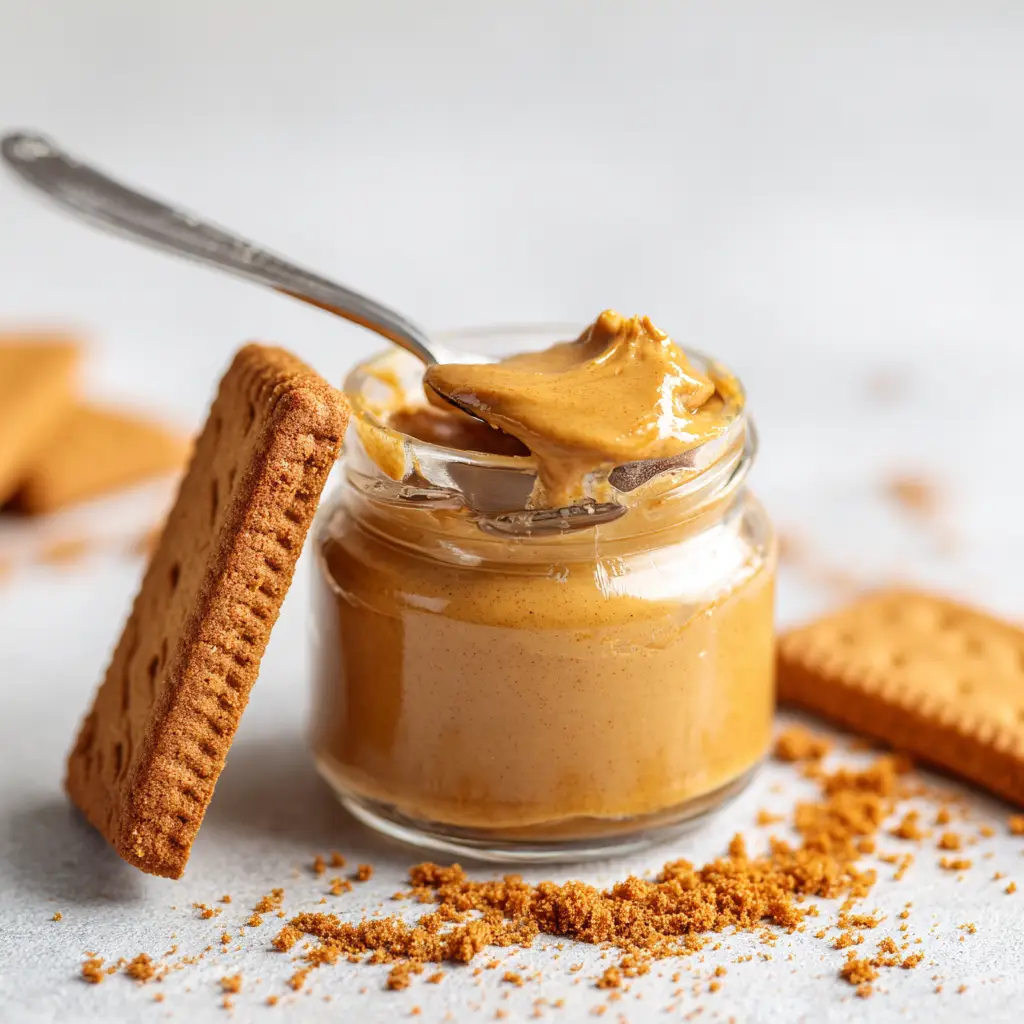
- Perfect Texture Confirmation: By slowly emulsifying the fats and liquids, you achieve a smooth, golden-brown creamy Biscoff cookie butter spread that perfectly clings to a spoon.
- Unmatched Flavor Depth: The addition of a touch of brown sugar and extra cinnamon enhances the natural caramelized notes of the baked speculoos cookies.
- Aesthetic Presentation: The recipe yields a visually stunning product, perfect for jarring and serving with a whole rectangular Biscoff speculoos cookie leaning against the rim.
- Versatile Application: It acts as a structural foundation for cheesecakes, frostings, and decadent breakfast pastries.
- Quick Execution: The entire process takes less than 15 minutes, requiring only a food processor and a microwave or stovetop.
Essential Components for Your Silky Speculoos Cookie Spread
The secret to a structurally sound and perfectly emulsified spread lies in the balance of dry crumbs, fats, and liquids. Every element in this Biscoff cookie butter recipe serves a precise scientific purpose. Gathering high-quality components ensures the best possible flavor and mouthfeel.
Biscoff Cookies: You will need 1 standard package, which is exactly 8.8 oz (250g) of Biscoff cookies. These provide the foundational flavor, the necessary starches for thickening, and the base for our finely crushed baked cookie crumbs.
Evaporated Milk: Use 1/4 cup (60ml) of evaporated milk to provide a rich, creamy liquid base without adding excess water. This helps thin the crushed cookies into a velvety paste while maintaining a long shelf life.
Coconut Oil (or Unsalted Butter): You need 3 tbsp (45g) of melted coconut oil to act as the primary emulsifying fat. This guarantees the spread firms up beautifully in the fridge but remains incredibly smooth at room temperature.
Light Brown Sugar: Adding 2 tbsp (30g) of light brown sugar deepens the caramel color to that signature golden-brown hue. It also slightly sweetens the evaporated milk to balance the overall flavor profile.
Ground Cinnamon: Incorporate 1/2 tsp (1g) of high-quality ground cinnamon. This invisible foundational ingredient amplifies the subtle spices already baked into the commercial cookies.
Vanilla Extract: Measure out 1 tsp (5ml) of pure vanilla extract. The alcohol in the extract evaporates slightly but leaves behind a floral sweetness that rounds out the harsh edges of the caramelized sugar.
Sea Salt: A crucial 1/4 tsp (1g) of fine sea salt acts as a flavor enhancer. It cuts through the rich, sugary profile and wakes up the palate with every bite.
Tools Needed to Achieve the Perfect Smooth Golden-Brown Texture
To execute this Biscoff cookie butter recipe properly, you must rely on mechanical friction to break down the starches. A high-powered food processor is non-negotiable for achieving a genuinely smooth consistency. Attempting this in a standard blender often yields a sticky, uneven paste that overheats the motor.
You will also need a small microwave-safe bowl for melting the fat and dissolving the sugar. A reliable silicone spatula is essential for scraping down the sides of your processor bowl, ensuring no coarse crumbs are left behind. Finally, prepare a small clear glass jar with an airtight lid for storing your finished spread.
Step-by-Step Instructions: Crafting the Thick and Creamy Biscoff Spread
The methodology behind this recipe relies on a phased emulsification process. We must first pulverize the dry ingredients before introducing our warm wet ingredients. Pay close attention to the sensory cues described below to guarantee success.
Phase 1: Crushing the Baked Speculoos Cookies
Begin by snapping the whole cookies in half and tossing them into the bowl of your food processor. Reserve one whole rectangular Biscoff speculoos cookie for garnish later. Pulse the machine repeatedly until the cookies break down into a fine, sandy dust.
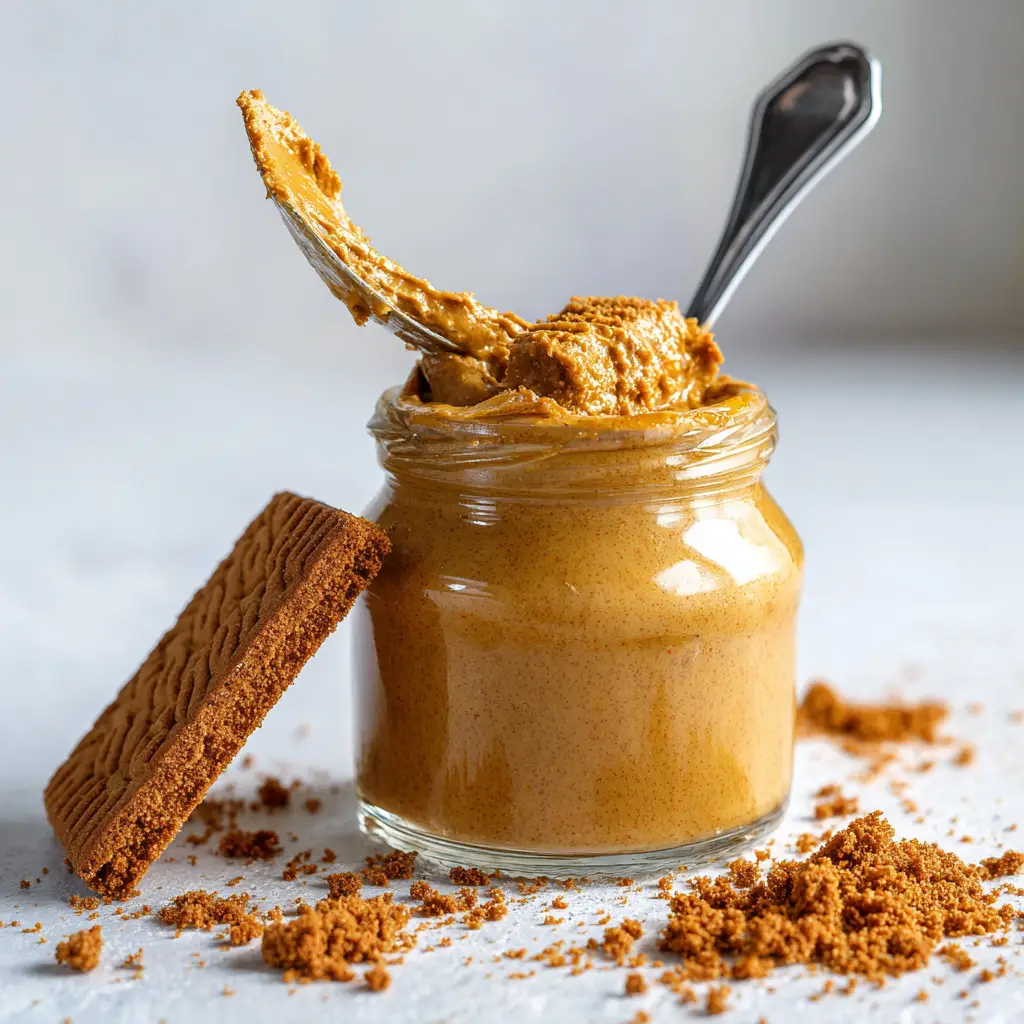
Listen for the loud rattling of the cookies to subside into a quiet, continuous whirring sound. Visually, you should see scattered finely crushed baked Biscoff cookie crumbs clinging to the sides of the plastic bowl. Ensure there are absolutely no large chunks remaining, as these will ruin the velvety texture.
Phase 2: Preparing the Liquid Emulsion
In a small microwave-safe bowl, combine the 1/4 cup (60ml) evaporated milk, 3 tbsp (45g) coconut oil, and 2 tbsp (30g) brown sugar. Heat this mixture in the microwave for 30 to 45 seconds until the oil is completely melted and the milk is warm. Whisk vigorously until the sugar granules dissolve completely.
This warming step is a critical culinary bridge. Warm liquids absorb into the dry cookie starches much more efficiently than cold liquids. Stir in the 1 tsp (5ml) vanilla extract and 1/4 tsp (1g) sea salt at this stage.
Phase 3: Blending into a Smooth Golden-Brown Paste
Turn the food processor back on and slowly stream the warm liquid mixture through the feed tube while the machine is running. Watch as the pale, dry crumbs instantly transform into a thick, cohesive ball of dough. Continue processing for a full 2 to 3 minutes.
The extended blending time is required to release the natural oils trapped within the baked cookies. You will notice the mixture relaxing from a stiff dough into a beautifully smooth, golden-brown creamy Biscoff cookie butter spread. Stop the machine once or twice to scrape down the sides with your silicone spatula.
Phase 4: Evaluating the Velvety Texture
Stop the processor and perform the spoon test. Dip a silver metal spoon into the mixture and lift it out. It should rest inside the bowl heavily coated in the thick velvety spread, slowly dripping off the edges in a thick ribbon.
If the mixture seems too stiff or clumpy, add an additional 1 tbsp (15ml) of warm evaporated milk and process for another 30 seconds. Transfer the finished product into your prepared small clear glass jar, smoothing the top elegantly.
The Culinary Science Behind Emulsifying Speculoos Spread
Understanding why this Biscoff cookie butter recipe works will make you a better home cook. The magic happens when the liquid binds with the suspended starches in the baked cookies. Because commercial cookies have a low moisture content, they act like a sponge when introduced to our warm evaporated milk.
The addition of liquid coconut oil creates a lipid barrier that prevents the starches from swelling too much and becoming gummy. As the spread cools in your pantry or fridge, the coconut oil solidifies slightly. This gives the final product that iconic, thick, spreadable consistency that rivals the store-bought jars.
Expert Culinary Tips for a Flawless Biscoff Cookie Butter Recipe
Even with a straightforward recipe, minor environmental factors can impact your final results. Follow these professional tips to ensure your spread is visually stunning and texturally perfect.
- Avoid Overheating: If you process the mixture for too long, the friction can cause the oils to separate. If the spread looks greasy, let it cool for 10 minutes, add a splash of cold milk, and pulse briefly to re-emulsify.
- Sift the Crumbs: For an ultra-luxurious, commercial-grade smoothness, pass your crushed cookie crumbs through a fine-mesh sieve before adding the liquids.
- Temperature Matters: Always ensure your liquid mix is warm, not boiling. Boiling liquids can actually cook the starches in the cookies, resulting in a sticky, glue-like texture.
- Flavor Enhancements: For a slightly darker, more robust flavor, toast your crushed cookie crumbs in a dry skillet over medium heat for 2 minutes before blending.
Keeping Your Jar of Cookie Butter Fresh: Storage & Freezing Guidelines
Proper storage is essential to maintain the velvety texture of your Biscoff cookie butter recipe. Because this recipe contains dairy (evaporated milk), it must be treated differently than commercial spreads. Transfer the finished spread into a sterile glass jar with a tight-fitting lid.
Store the jar in the refrigerator for up to two weeks. When chilled, the spread will become quite firm due to the coconut oil. To serve, simply leave the jar at room temperature for 30 minutes, or microwave a portion for 10 seconds until it regains its smooth, creamy consistency.
You can also freeze this spread for up to three months. Portion it into ice cube trays or a freezer-safe container. Thaw overnight in the refrigerator before bringing it to room temperature for serving.
What to Serve With Your Homemade Speculoos Spread
This incredible Biscoff cookie butter recipe is not just for eating straight off a silver metal spoon—though we highly encourage that! Its rich, caramelized flavor pairs beautifully with a wide variety of baked goods and desserts. Use it as a central component in your weekly meal prep or holiday baking.
For an unforgettable dessert experience, swirl generous dollops of this spread into a batch of no bake mini Biscoff cheesecakes. The creamy texture perfectly complements the tangy cream cheese. If you are baking for a crowd, gently warm the spread and use it as a decadent glaze drizzled over warm banana bread brownies.
Looking for a luxurious breakfast? Spread a thick layer inside a flaky apple goat cheese croissant to balance the savory notes with sweet speculoos spice. Alternatively, you can beat this spread into buttercream to frost a towering peanut butter cake, or sandwich it tightly between two soft salted honey cinnamon cookies.
Answering Your Most Pressing Questions About This Biscoff Cookie Butter Recipe
Yes! Biscoff cookies are naturally vegan. To make the entire recipe vegan, simply substitute the evaporated milk with a rich dairy-free alternative like full-fat canned coconut milk or oat milk creamer, and ensure you are using coconut oil rather than butter.
Absolutely. Any spiced speculoos style cookie will work beautifully in this recipe. Just be sure to weigh out exactly 8.8 oz (250g) of cookies to ensure the liquid-to-dry ratio remains perfectly balanced.
The coconut oil in the recipe will solidify when chilled. To return the spread to its velvety, spoonable state, simply let the jar sit at room temperature for 30 minutes, or microwave an individual portion for 5 to 10 seconds.
Because this recipe uses evaporated milk, it must be stored in an airtight glass jar in the refrigerator. It will stay fresh and delicious for up to 2 weeks. You can also freeze it for up to 3 months.
A crumbly texture usually means the cookies weren’t crushed finely enough before adding the liquids, or your liquid wasn’t warm enough to absorb into the starches. To fix it, add an extra tablespoon of warm milk and process for another 1-2 minutes until smooth.
The Official Creamy Biscoff Cookie Butter Recipe Card
The Ultimate Homemade Creamy Biscoff Cookie Butter Recipe
Ingredients
Equipment
Method
- Snap the Biscoff cookies in half and place them in the food processor. Pulse repeatedly until they break down into finely crushed baked cookie crumbs with no large chunks remaining.
- In a microwave-safe bowl, combine the evaporated milk, melted coconut oil, and brown sugar. Microwave for 30-45 seconds until warm, whisking until the sugar dissolves. Stir in the vanilla extract and sea salt.
- Turn the food processor on and slowly pour the warm liquid mixture through the feed tube into the crushed cookies. Process for 2 to 3 minutes.
- Stop to scrape down the sides. The mixture should transform into a smooth, golden-brown creamy spread that heavily coats a resting metal spoon. Transfer to a small clear glass jar to store.
Notes
Tip 2: Store in an airtight jar in the refrigerator for up to 2 weeks. Let sit at room temperature for 30 minutes before serving.
Final Thoughts on Your New Favorite Spread & Sharing to Pinterest
Mastering this Biscoff cookie butter recipe brings a touch of gourmet pastry art straight to your kitchen counter. You have successfully transformed simple baked cookies into a smooth, golden-brown spread that looks breathtaking in a small clear glass jar. The scattered crumbs and perfectly coated spoon are a testament to your culinary success.
We hope this thick, velvety spread becomes a staple in your home dessert rotation. If you loved the results, please leave a star rating and comment below detailing how you served it! Don’t forget to save this recipe for later by pinning it to your favorite dessert boards on Pinterest.