Dive into the vibrant, refreshing flavors of these incredible Thai Basil Beef Rolls. If you’re searching for a recipe that’s bursting with savory beef, crisp vegetables, and aromatic herbs all wrapped in a delicate rice paper shell, you’ve found it. This guide will walk you through creating the perfect beef summer rolls, complete with two irresistible dipping sauces that elevate every single bite. They are the perfect light dinner or stunning appetizer for any occasion.
Forget heavy, fried appetizers. These fresh rolls are packed with wholesome ingredients, making them a healthy and satisfying choice. Similar to a grilled steak bowl, this recipe focuses on highlighting the quality of the beef and fresh produce. Let’s get rolling!
What Are Thai Basil Beef Rolls?
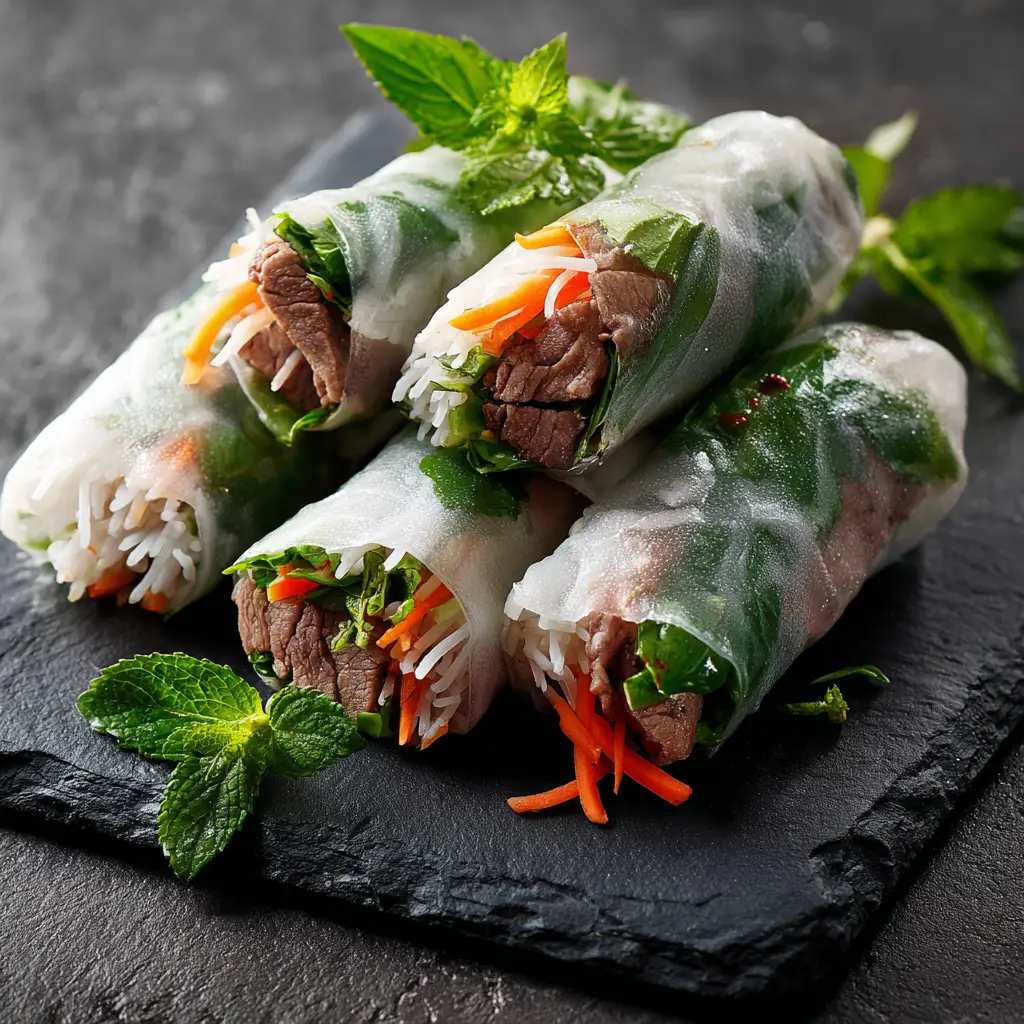
Thai Basil Beef Rolls are a type of fresh spring roll, often associated with Vietnamese cuisine (Gỏi cuốn), but with a distinct Thai flavor profile. They consist of cooked beef, fresh vegetables like carrots and cucumber, rice vermicelli noodles, and plenty of Thai basil leaves tightly wrapped in rehydrated rice paper. Unlike their fried counterparts, these rolls are served cold or at room temperature, making them a wonderfully refreshing dish.
Why You’ll Love This Recipe
- Incredibly Flavorful: The combination of savory marinated beef, sweet Thai basil, and fresh veggies is a true delight for the senses.
- Healthy & Light: Packed with protein and fresh produce, these rolls are a guilt-free meal you can feel good about.
- Perfectly Customizable: Easily swap out veggies or proteins to make these rolls your own.
- Stunning Appetizer: They look beautiful on a platter and are guaranteed to impress your guests.
Ingredients You’ll Need
This recipe is broken down into three parts: the rolls themselves and two amazing dipping sauces. While we love the creamy peanut sauce, the zesty Nuoc Cham offers a lighter, tangier alternative.
For the Beef Rolls
- 1 lb flank steak or sirloin, thinly sliced
- 2 tbsp soy sauce
- 1 tbsp fish sauce
- 1 tbsp lime juice
- 1 tsp sesame oil
- 2 cloves garlic, minced
- 8-10 round rice paper wrappers
- 4 oz rice vermicelli noodles
- 1 large carrot, julienned
- 1 cucumber, julienned
- 1 cup fresh Thai basil leaves
- 1/2 cup fresh mint leaves
- 1/2 cup fresh cilantro leaves
For the Creamy Peanut Dipping Sauce
- 1/2 cup creamy peanut butter
- 1/4 cup warm water
- 2 tbsp hoisin sauce
- 1 tbsp lime juice
- 1 tbsp soy sauce
- 1 tsp chili garlic sauce (or to taste)
For the Zesty Lime Dipping Sauce (Nuoc Cham)
- 1/2 cup water
- 1/4 cup fish sauce
- 1/4 cup granulated sugar
- 2 tbsp fresh lime juice
- 1-2 Thai chilies, finely chopped
- 1 clove garlic, minced
Choosing the Best Beef
The star of our Thai Basil Beef Rolls is, of course, the beef. For the best texture, choose a tender cut that cooks quickly. Flank steak or sirloin are excellent choices; slice them thinly against the grain for maximum tenderness. You can also use lean ground beef for a different, but equally delicious, texture. Just be sure to drain any excess fat after cooking.
How to Make Thai Basil Beef Rolls (Step-by-Step)
Follow these simple steps to assemble your delicious rolls. The key is to have all your ingredients prepped and ready to go before you start wrapping—a concept known as ‘mise en place’.
Step 1: Cook the Beef
In a medium bowl, whisk together the soy sauce, fish sauce, lime juice, sesame oil, and minced garlic. Add the thinly sliced beef and toss to coat. Let it marinate for at least 15 minutes. Heat a large skillet or wok over medium-high heat. Add the beef and cook until just browned and cooked through, about 3-5 minutes. Remove from heat and set aside.
Step 2: Prepare the Noodles and Vegetables
Cook the rice vermicelli noodles according to the package directions. Typically, this involves soaking them in hot water for a few minutes until tender. Drain them and rinse with cold water to stop the cooking process. Set aside. Ensure all your vegetables and herbs are washed, chopped, and ready for assembly.
Step 3: Assemble the Rolls
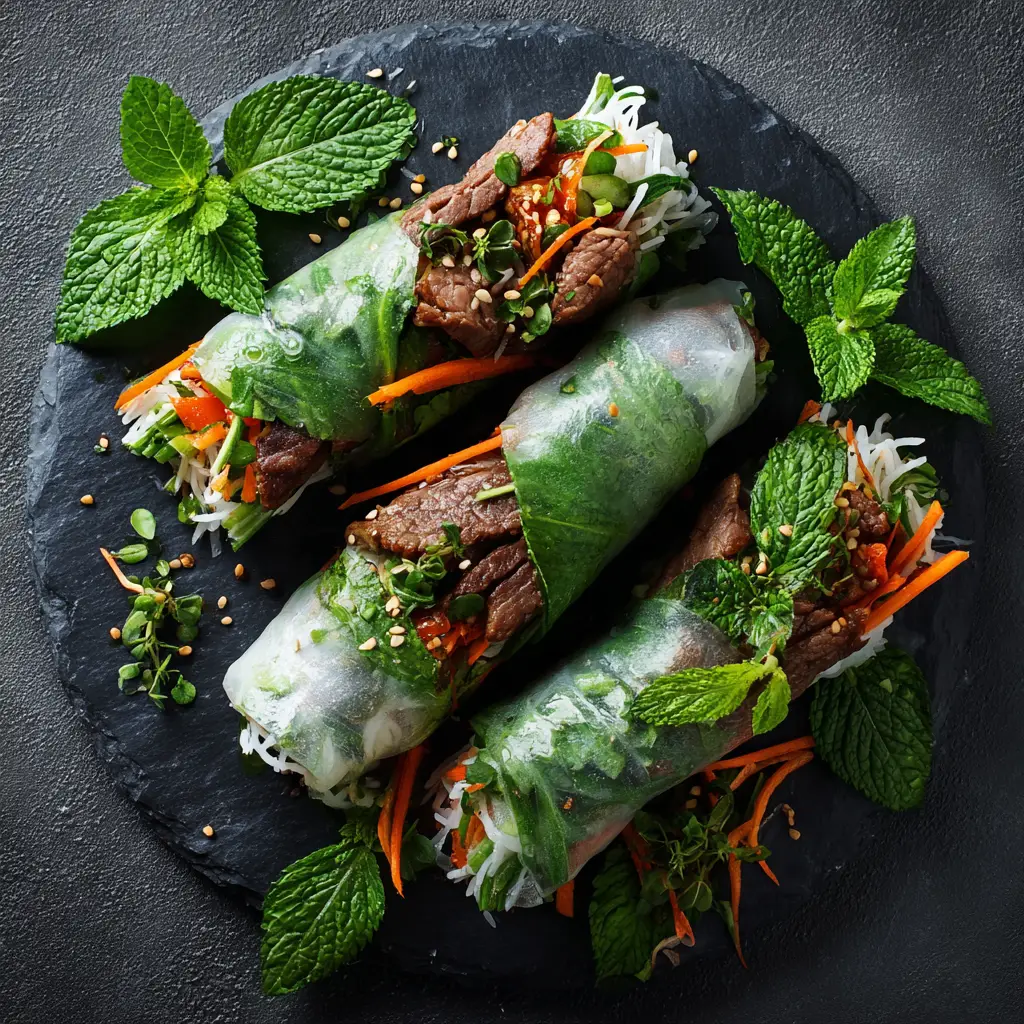
Fill a shallow dish, wider than your rice paper, with warm water. Submerge one rice paper wrapper in the water for about 15-20 seconds, or until it becomes soft and pliable. Carefully lay it flat on a clean, damp surface. On the third of the wrapper closest to you, layer a small amount of rice noodles, a few slices of beef, julienned carrots, cucumber, and a generous amount of Thai basil, mint, and cilantro. Don’t overfill! Fold the bottom edge up over the filling, then fold in the sides. Roll it forward tightly to form a compact log. Repeat with the remaining ingredients.
Mastering the Dipping Sauces
A great dipping sauce is essential! Here’s how to whip up our two favorite options for these Thai Basil Beef Rolls.
How to Make Creamy Peanut Sauce
In a small bowl, whisk together the peanut butter and warm water until smooth. Add the hoisin sauce, lime juice, soy sauce, and chili garlic sauce. Whisk until everything is well combined. If the sauce is too thick, add more water, one teaspoon at a time, until you reach your desired consistency.
How to Make Zesty Lime Sauce (Nuoc Cham)
This sauce is a classic in Southeast Asian cuisine, similar to what you might find with a noodle dish. In a small bowl, combine the water and sugar, stirring until the sugar is completely dissolved. Add the fish sauce, lime juice, chopped Thai chilies, and garlic. Stir well. Let it sit for at least 10 minutes for the flavors to meld.
Expert Tips for Perfect Rolls
- Don’t Oversoak the Rice Paper: A common mistake is leaving the wrapper in water for too long. It should be pliable but still slightly firm when you remove it; it will continue to soften as you add the fillings.
- Work on a Damp Surface: A damp cutting board or clean, damp kitchen towel will prevent the delicate rice paper from sticking.
- Roll Tightly: Keep a firm but gentle pressure as you roll to ensure the contents are snug and the roll holds its shape.
- Prep Everything First: Assembly is fast. Have all your fillings—beef, noodles, veggies, and herbs—laid out and ready before you start soaking the rice paper. This makes the process smooth and efficient, much like preparing healthy sautéed vegetables.
Variations and Substitutions
This Thai Basil Beef Rolls recipe is a great starting point. Feel free to get creative!
- Protein Swap: Try cooked shrimp, grilled chicken, or crispy tofu instead of beef. For a taste of Thailand, you could even draw inspiration from a classic Massaman curry recipe and use spiced chicken.
- Add More Veggies: Bell peppers, lettuce, or bean sprouts would all be delicious additions.
- Make it Spicy: Add some thinly sliced jalapeños or serrano peppers directly into the rolls for an extra kick.
What to Serve With Your Rolls
These rolls are a fantastic meal on their own, but they also pair wonderfully with other dishes. Serve them as an appetizer before a main course like a comforting bowl of homemade curry. They also work well as part of a larger spread of appetizers for a party or gathering.
How to Store Leftovers
It’s best to enjoy these Thai Basil Beef Rolls fresh, as the rice paper can dry out over time. If you have leftovers, wrap them individually in plastic wrap and store them in an airtight container in the refrigerator for up to 24 hours. Note that the texture of the wrapper will change slightly. The dipping sauces can be stored in airtight containers in the fridge for up to a week.
Frequently Asked Questions
Yes, they are a very healthy option. They are not fried and are packed with lean protein from the beef and lots of fresh vegetables and herbs, making them a nutritious and low-calorie meal.
They are best served fresh as the rice paper can dry out. However, you can make them a few hours ahead. To store, wrap each roll individually in plastic wrap and keep them in an airtight container in the refrigerator.
The key is to not oversoak it. Dip the rice paper in warm water for only 15-20 seconds until it’s pliable but not overly limp. Also, work on a damp, smooth surface and be gentle but firm when you roll it.
Thai basil has a sturdier leaf, a purple stem, and a distinct anise or licorice-like flavor, which is characteristic of many Thai dishes. Regular basil (like Genovese) is more peppery and sweet.
We recommend a tender cut like flank steak or sirloin, sliced thinly against the grain. This ensures the beef is tender and easy to bite through. Lean ground beef also works well for a different texture.
The Perfect Thai Basil Beef Rolls Recipe
You now have everything you need to create the most delicious Thai Basil Beef Rolls right in your own kitchen. This recipe is a celebration of fresh ingredients and bold flavors, perfect for sharing with family and friends. We know you’ll love making—and eating—them as much as we do. If you try this recipe, please leave a comment below and share your creations with us on Pinterest!
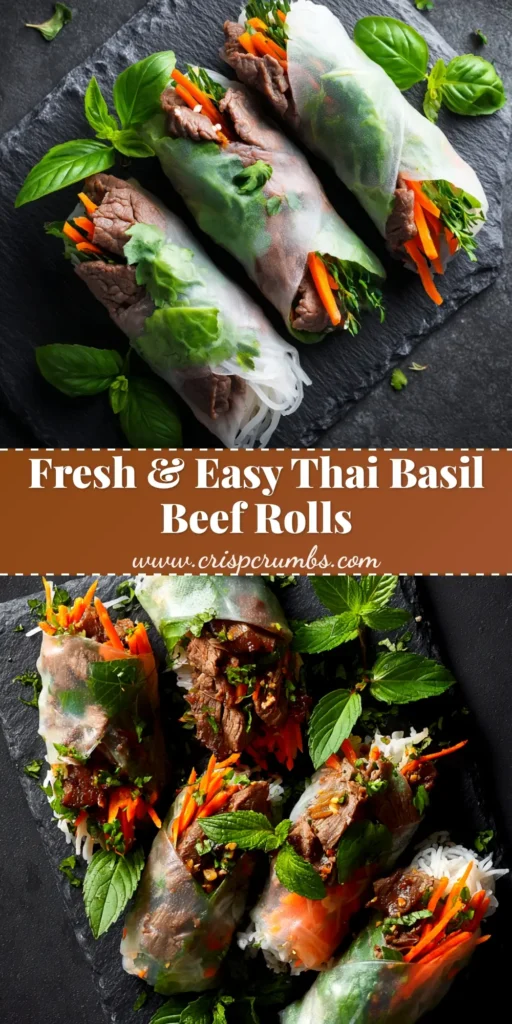
Thai Basil Beef Rolls Recipe
Thai Basil Beef Rolls (Fresh & Easy Recipe)
Ingredients
Equipment
Method
- In a medium bowl, whisk together soy sauce, fish sauce, lime juice, sesame oil, and garlic. Add the sliced beef, toss to coat, and marinate for at least 15 minutes. Heat a large skillet over medium-high heat and cook the beef until browned, about 3-5 minutes. Set aside.
- Cook rice vermicelli noodles according to package directions. Drain and rinse with cold water. Prepare all vegetables and herbs by julienning the carrot and cucumber and washing the herbs.
- In a small bowl, whisk together peanut butter and warm water until smooth. Add hoisin sauce, lime juice, soy sauce, and chili garlic sauce, and whisk until fully combined.
- Fill a shallow dish with warm water. Submerge one rice paper wrapper for 15-20 seconds until pliable. Lay flat on a damp surface. Layer a small amount of noodles, beef, carrots, cucumber, and herbs on the bottom third. Fold the bottom edge over the filling, fold in the sides, and roll tightly. Repeat with remaining ingredients.
- Serve the fresh Thai Basil Beef Rolls immediately with the creamy peanut dipping sauce.
Notes
Tip 2: Have all your ingredients prepped and ready before you start rolling to make the process quick and easy.
Tip 3: Wrap leftover rolls individually in plastic wrap and refrigerate for up to 24 hours.