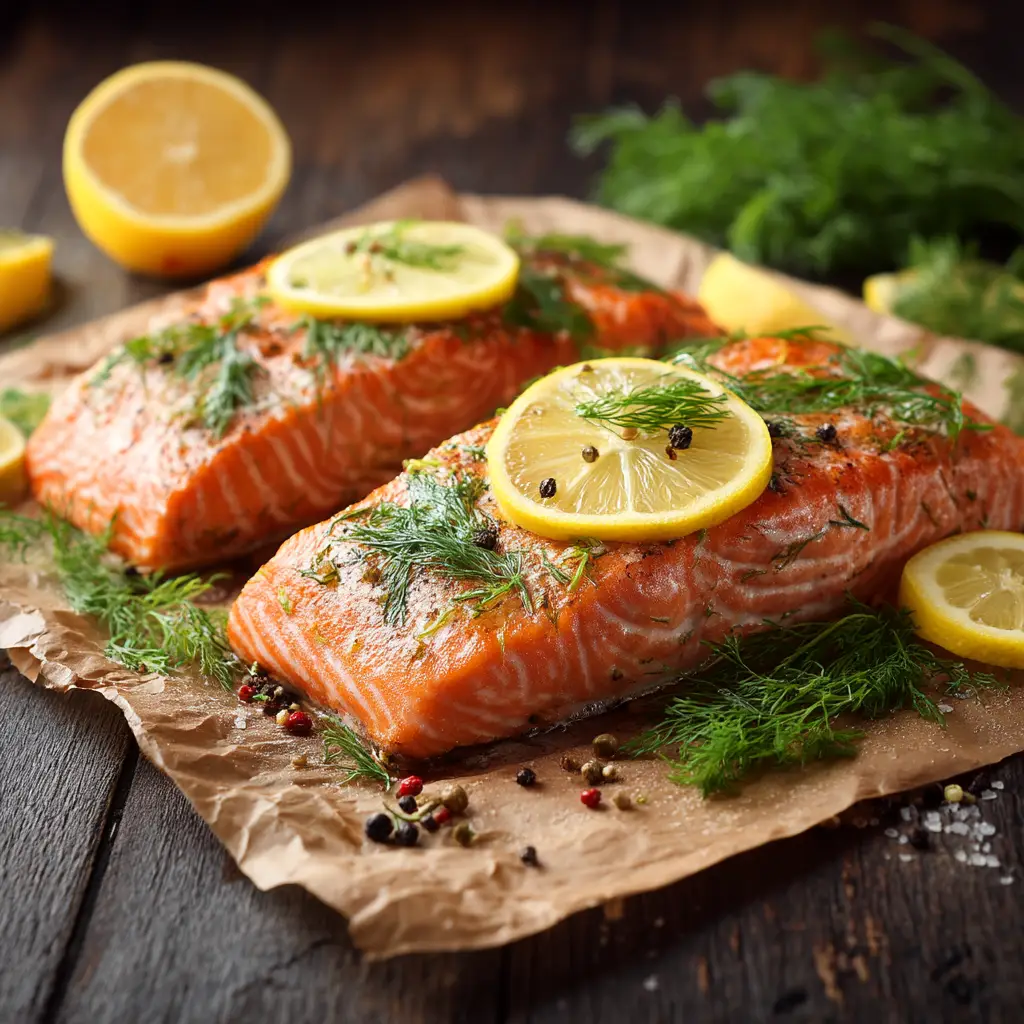
Get ready to discover the weeknight dinner of your dreams. This Lemon Dill Baked Salmon recipe is unbelievably easy, incredibly fast, and packed with bright, fresh flavor. In just about 20 minutes, you can have perfectly flaky, moist, and tender salmon on the table. It’s a healthy, elegant meal that’s simple enough for any night of the week but impressive enough for company. Forget dry, overcooked fish forever; this foolproof method will make you a salmon-cooking expert.
We combine fresh dill, zesty lemon, and a touch of garlic to create a simple yet sophisticated sauce that perfectly complements the rich flavor of the salmon. It’s a classic pairing that never fails to delight. Let’s get cooking!
Why This Lemon Dill Baked Salmon is a Weeknight Winner
When your schedule is packed, you need recipes that are fast, delicious, and don’t require a sink full of dishes. This baked salmon checks all the boxes.
- Quick & Easy: With just 10 minutes of prep and about 15 minutes in the oven, this dish is the definition of a quick meal.
- Healthy & Nutritious: Salmon is a powerhouse of omega-3 fatty acids, protein, and essential vitamins. This recipe uses simple, wholesome ingredients for a meal you can feel great about.
- Minimal Ingredients: You only need a handful of fresh ingredients to create a dish bursting with flavor.
- Foolproof Results: Baking is one of the most reliable ways to cook salmon. This recipe yields moist, flaky results every single time.
The Simple Ingredients You’ll Need
The magic of this recipe lies in its simplicity. We’re using fresh, high-quality ingredients to let the natural flavors shine. You won’t find a long, complicated list here—just the essentials for a perfect Lemon Dill Baked Salmon.
For the Salmon
- Salmon Fillets: Four 6-ounce salmon fillets, skin-on or skinless. King, Sockeye, or Coho are all excellent choices.
- Olive Oil: A light coating helps the salmon cook evenly and prevents it from drying out.
- Salt & Black Pepper: To season the fish and enhance all the other flavors.
For the Lemon Dill Butter Sauce
- Unsalted Butter: Melted butter forms the rich base of our sauce.
- Fresh Dill: Finely chopped. There’s no substitute for the bright, aromatic flavor of fresh dill.
- Garlic: Freshly minced garlic adds a pungent depth.
- Lemon: We’ll use both the zest and juice for a multi-layered citrus kick. Plus, extra lemon slices for baking on top.
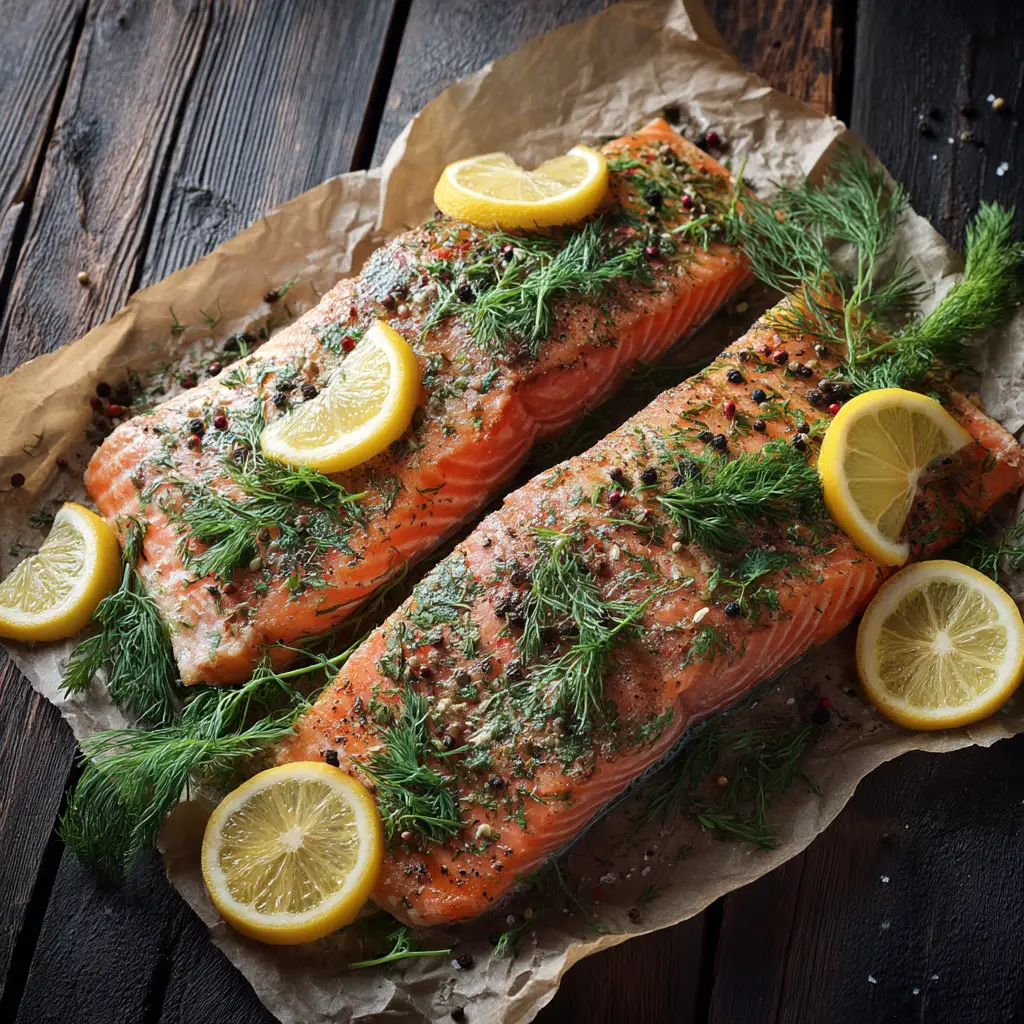
How to Make Perfect Lemon Dill Baked Salmon (Step-by-Step)
This simple process guarantees a delicious outcome. Follow these steps for a flawless meal.
- Preheat and Prep: First, preheat your oven to 400°F (200°C). Line a baking sheet with parchment paper for easy cleanup. Pat the salmon fillets completely dry with a paper towel—this is key for getting a nice surface.
- Season the Salmon: Place the salmon fillets on the prepared baking sheet. Drizzle them with olive oil and season generously with salt and freshly ground black pepper on both sides.
- Mix the Sauce: In a small bowl, whisk together the melted butter, chopped fresh dill, minced garlic, lemon zest, and lemon juice.
- Sauce and Bake: Spoon the lemon dill butter sauce evenly over the top of each salmon fillet. Arrange a few thin slices of lemon on top of the salmon.
- Bake to Perfection: Transfer the baking sheet to the preheated oven and bake for 12-15 minutes. The exact time will depend on the thickness of your fillets. The salmon is done when it flakes easily with a fork or reaches an internal temperature of 145°F (63°C).
- Rest and Serve: Let the salmon rest for a couple of minutes before serving. This allows the juices to redistribute, ensuring a moist fillet.
Pro Tips for Foolproof Baked Salmon
Want to ensure your Lemon Dill Baked Salmon is perfect every time? Keep these simple tips in mind.
- Don’t Overcook: This is the golden rule of cooking salmon. Keep a close eye on it and check for doneness at the 12-minute mark. Carryover cooking will continue to raise the temperature after you remove it from the oven.
- Use an Instant-Read Thermometer: For guaranteed results, use a meat thermometer. Insert it into the thickest part of the fillet; it should read between 140-145°F for a perfectly cooked, flaky fish.
- Fresh is Best: While you can use dried dill in a pinch, fresh dill provides a significantly brighter and more robust flavor that truly makes this dish shine.
- Pat It Dry: Don’t skip drying the salmon fillets. A dry surface allows the olive oil and seasonings to adhere better and promotes even cooking.
Delicious Serving Suggestions
This versatile salmon pairs beautifully with a wide variety of sides. For a complete and satisfying meal, try serving it with roasted asparagus, steamed green beans, or a simple side salad. It’s also fantastic with fluffy quinoa, roasted potatoes, or a bed of wild rice. For a truly elegant pairing, try it with our unique Sautéed Leeks for a delicate, savory complement. A crisp glass of Sauvignon Blanc or Pinot Grigio also makes a wonderful accompaniment.
Recipe Variations to Try
While the classic lemon and dill combination is a star, feel free to get creative! Here are a few ideas:
- Add Capers: For a briny, salty kick, sprinkle a tablespoon of capers over the salmon along with the sauce.
- Include Other Herbs: Fresh parsley or chives can be added to the dill for a more complex herb flavor.
- Spicy Kick: Add a pinch of red pepper flakes to the butter sauce for a little bit of heat.
Looking for another fantastic seafood dish? This Creamy Salmon Spinach Pasta is a must-try for a comforting and indulgent meal.
Storing and Reheating Leftovers
Got leftovers? You’re in luck! This salmon is delicious the next day. Store it in an airtight container in the refrigerator for up to 2 days. You can enjoy it cold on top of a salad, or reheat it gently in a 275°F (135°C) oven until just warmed through to prevent it from drying out. For another great make-ahead meal idea, check out this easy breakfast burrito recipe.
Frequently Asked Questions
Yes, you can use frozen salmon. However, for the best results, you should thaw it completely in the refrigerator overnight before cooking. Once thawed, pat it very dry with paper towels before seasoning.
There are two easy ways to check for doneness. First, the salmon should flake easily when gently pressed with a fork. For the most accurate result, use an instant-read thermometer; the internal temperature in the thickest part should be 145°F (63°C).
The easiest way to prevent sticking and ensure easy cleanup is to line your baking sheet with parchment paper. A light coating of oil on the pan or parchment paper also helps.
This dish is very versatile! It pairs wonderfully with roasted vegetables like asparagus or broccoli, a fresh green salad, quinoa, rice, or roasted potatoes. Any light side dish will complement the salmon’s fresh flavors.
The best temperature for baking salmon is 400°F (200°C). This high heat cooks the salmon quickly, helping it stay moist and tender on the inside while being perfectly cooked on the outside.
Your New Favorite Salmon Recipe Awaits
This Lemon Dill Baked Salmon is more than just a recipe; it’s a solution for busy weeknights, a healthy choice you can feel good about, and a delicious meal that will earn rave reviews from your family. It’s simple, elegant, and consistently perfect. Give it a try and let us know what you think in the comments below. We’d love to see your creations—share them on Pinterest!
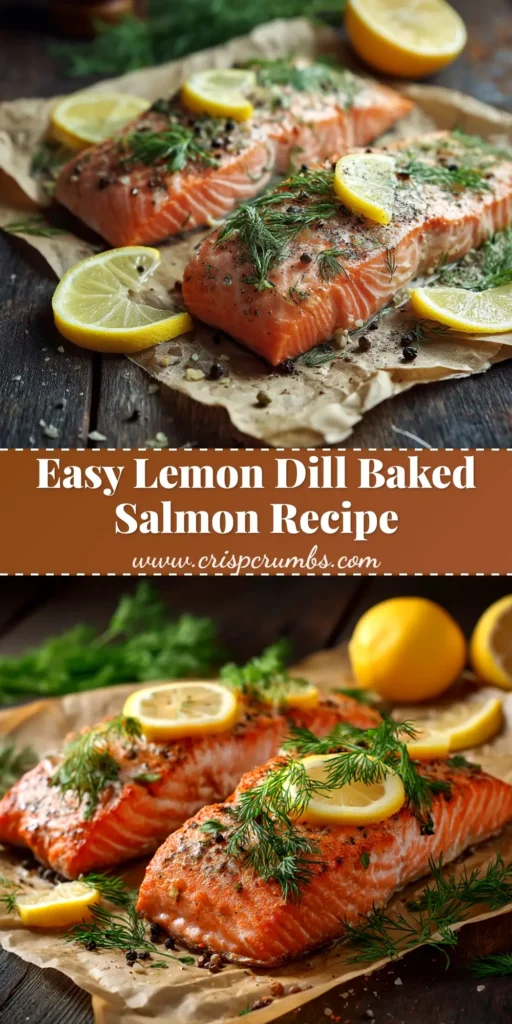
Lemon Dill Baked Salmon Recipe
Lemon Dill Baked Salmon: The Easiest, Flakiest Recipe
Ingredients
Equipment
Method
- Preheat your oven to 400°F (200°C). Line a baking sheet with parchment paper. Pat the salmon fillets completely dry with a paper towel.
- Place the salmon fillets on the prepared baking sheet. Drizzle with olive oil and season generously with salt and freshly ground black pepper.
- In a small bowl, whisk together the melted butter, chopped fresh dill, minced garlic, lemon zest, and lemon juice.
- Spoon the lemon dill butter sauce evenly over the top of each salmon fillet. Arrange a few thin slices of lemon on top.
- Transfer the baking sheet to the preheated oven and bake for 12-15 minutes, or until the salmon flakes easily with a fork and reaches an internal temperature of 145°F (63°C).
- Let the salmon rest for a couple of minutes before serving to allow the juices to redistribute.
Notes
Use Fresh Herbs: Fresh dill provides the best flavor for this recipe.
Internal Temperature: For perfect results, use an instant-read thermometer to check for doneness.